The first 1000 days of life—from pregnancy to your baby’s second birthday—are the most crucial window for infant brain development. During this time, nearly 80–90% of brain growth takes place, forming the foundation for your child’s intelligence, memory, and learning abilities. This is exactly why choosing the right brain development foods for infants becomes so important for every parent.
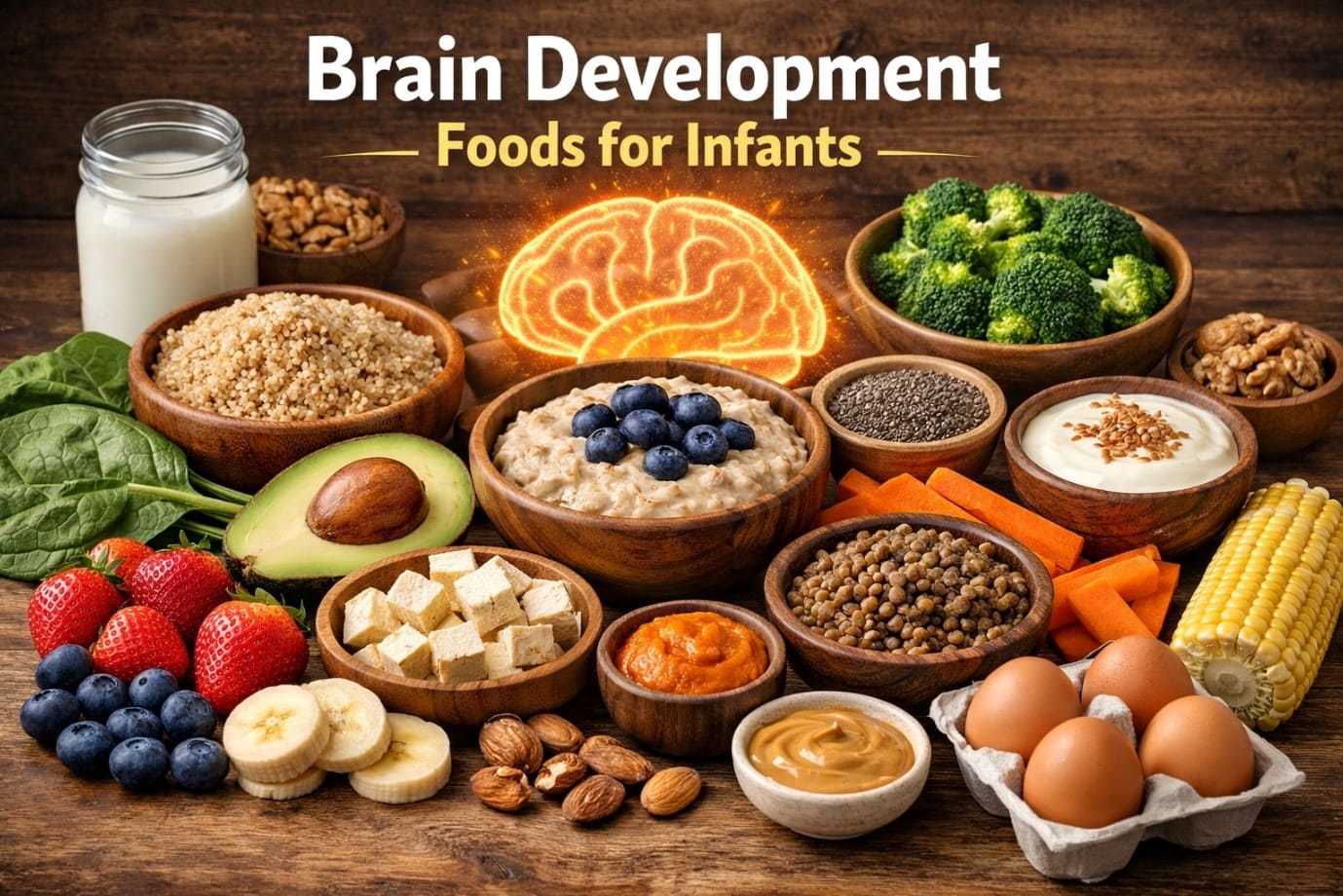
As a mother, it’s natural to wonder whether you’re providing the right foods for brain development of infant. The truth is simple yet powerful: what your baby eats today directly impacts its mental development tomorrow. A nutrient-rich diet filled with the right brain growth foods can support faster neural connections, better cognitive skills, and improved focus as your child grows.
In fact, the relationship between food and brain development is deeply interconnected. Essential nutrients like healthy fats, iron, protein, and vitamins play a key role in building brain cells and enhancing memory. Including the best foods for brain development in your baby’s daily diet ensures that their growing brain gets everything it needs during this critical stage.
In this blog, you will discover the most effective brain development foods for infants, along with an easy-to-follow age-wise feeding approach and practical, Indian diet-friendly options. Whether you are just starting solids or planning balanced meals, this article will help you make smarter choices for your baby’s healthy brain growth.
Why Nutrition is Crucial for Infant Brain Development
During infancy, your baby’s brain grows at an extraordinary pace, making proper nutrition a key pillar for mental development of an infant. In fact, the early months of life are when the brain forms millions of neural connections every second. This rapid growth highlights why including the right foods is essential for supporting the mental development of an infant.
Rapid Brain Growth in Infancy
The first year of life is marked by intense brain activity and development. During this time, the brain is highly sensitive to nutrition, and the quality of brain growth foods directly impacts how efficiently it develops. A lack of proper nutrients can slow down this process, while the right healthy food can enhance cognitive potential.
Role of Nutrients in
- Cognitive Development: The link between food and brain development is especially important when it comes to cognitive skills. Nutrients from foods help improve attention span, problem-solving ability, and early learning skills. Including the best foods for brain development ensures your baby builds a strong cognitive foundation.
- Memory Development: Memory formation begins early in life, and it is influenced by proper nutrition. Certain brain development foods provide essential compounds that support how your baby processes and retains information, which is crucial for learning and recognition.
- Formation of Neural Connections: Neural connections are the pathways that allow the brain to function efficiently. A diet rich in nutrients for brain development strengthens these connections, helping your baby respond better to stimuli and learn faster.
For example, DHA, a key component of DHA brain development food, plays a vital role in building brain cells and improving visual and cognitive abilities. Iron is equally crucial, as it helps carry oxygen to the brain, directly impacting attention span and intelligence. Similarly, choline supports memory formation and enhances overall brain signaling, making it an important part of best food for infant brain development.
By consistently including the right foods, parents can ensure their baby’s brain grows strong, sharp, and ready for future learning. For more details, you can also go through our comprehensive blog on Importance of Child nutrition.
Key Nutrients for Infant Brain Development
Proper brain development and nutrition go hand in hand, especially during the early stages of life. Including the right nutrients through balanced meals ensures optimal mental development of an infant. Let’s understand the most essential nutrients and how they contribute to building strong cognitive abilities.
1. DHA (Omega-3) – Building Brain Structure
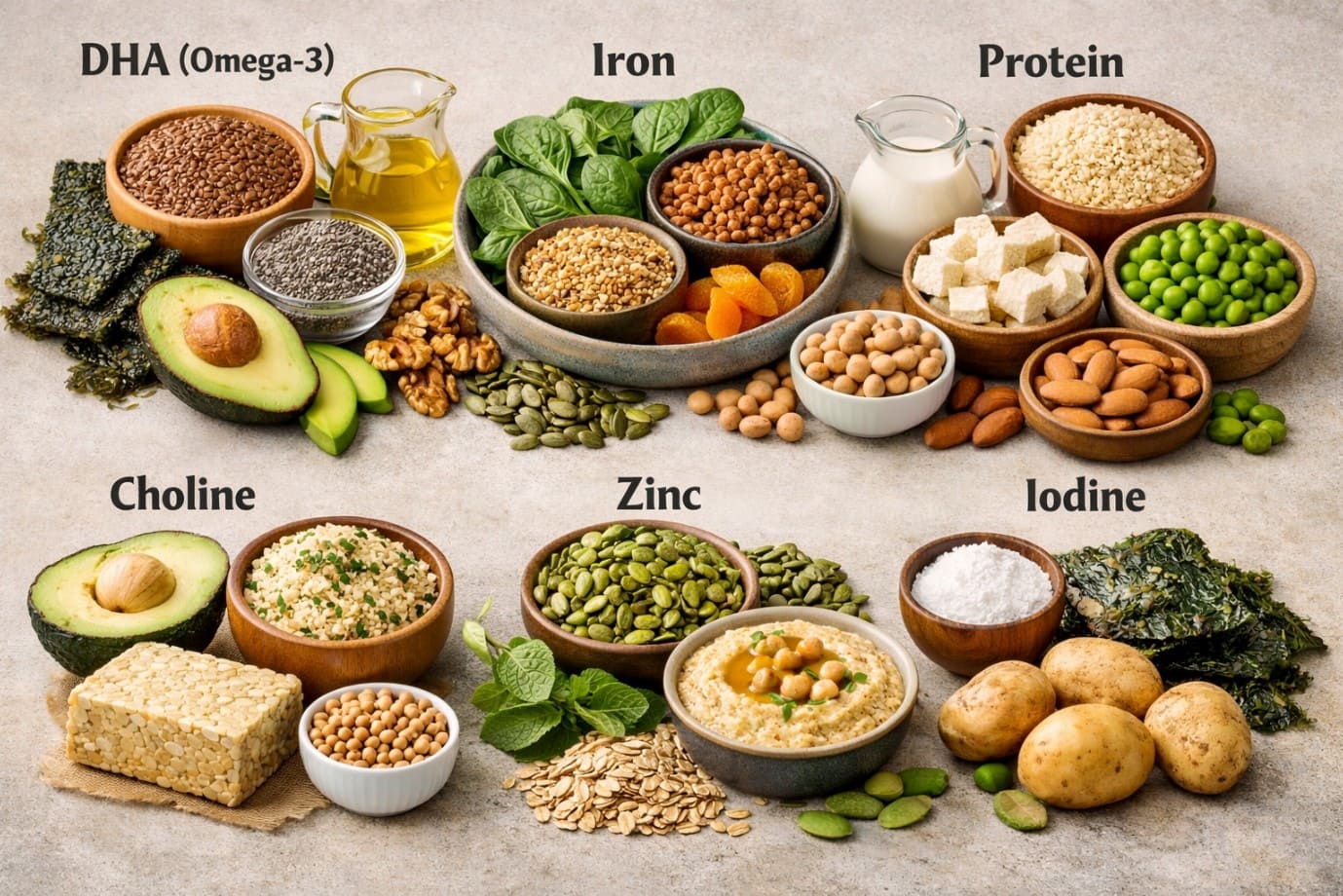
DHA is one of the most important components of DHA brain development food, as it forms a major part of brain tissue. It plays a crucial role in improving cognitive function and visual development. Including DHA-rich brain growth foods helps strengthen brain structure during early life. For Indian diets, walnuts (in powdered or puree form for older infants) are a great addition to brain development foods for infants.
2. Iron – Preventing Developmental Delays
It is essential for carrying oxygen to the brain, making it a key element in the nutrition for brain development of infants. A deficiency can lead to delayed cognitive skills and reduced attention span. Including iron-rich foods like spinach puree, jaggery, and lentils ensures proper brain functioning of infants and supports steady growth.
3. Protein – Building Brain Cells
It is fundamental for creating and repairing brain cells, making it one of the most important nutrients for brain development. It supports neurotransmitter function and overall brain activity. Indian staples like dal, paneer, and khichdi are best food for infant brain development and easy to include in a baby’s daily diet.
4. Choline – Supporting Memory & Learning
It is vital for memory formation and learning ability. It enhances communication between brain cells, making it an essential part of brain development foods. Eggs are one of the best foods for brain development of infants and can be introduced after 6 months in a well-cooked form.
5. Zinc & Iodine – Enhancing Cognitive Function
These play a key role in brain signalling and cognitive performance. These minerals are crucial for proper mental development of an infant, helping improve focus, learning ability, and overall brain health.
6. Nutrient Summary Table
Nutrient | Role | Indian Food Source |
DHA | Brain structure & function | Walnuts |
Iron | Oxygen supply to brain | Spinach, jaggery, lentils |
Protein | Builds brain cells | Dal, paneer, khichdi |
Choline | Memory & learning | Eggs |
Zinc & Iodine | Cognitive function | Whole grains, dairy, iodized salt |
Including these essential nutrients in daily meals ensures that parents are providing the best food for infant brain development. A balanced approach to nutrition not only supports physical growth but also builds a strong foundation for lifelong learning and intelligence.
You can also read our dedicated blog on Infant Nutrition.
Top Brain Development Foods for Infants
Choosing the right brain development foods for infants plays a powerful role in shaping and supporting the mental development of an infant. Including a variety of brain growth foods in your baby’s diet ensures balanced nutrition and stronger cognitive skills.
1. Eggs (Super Brain Food):
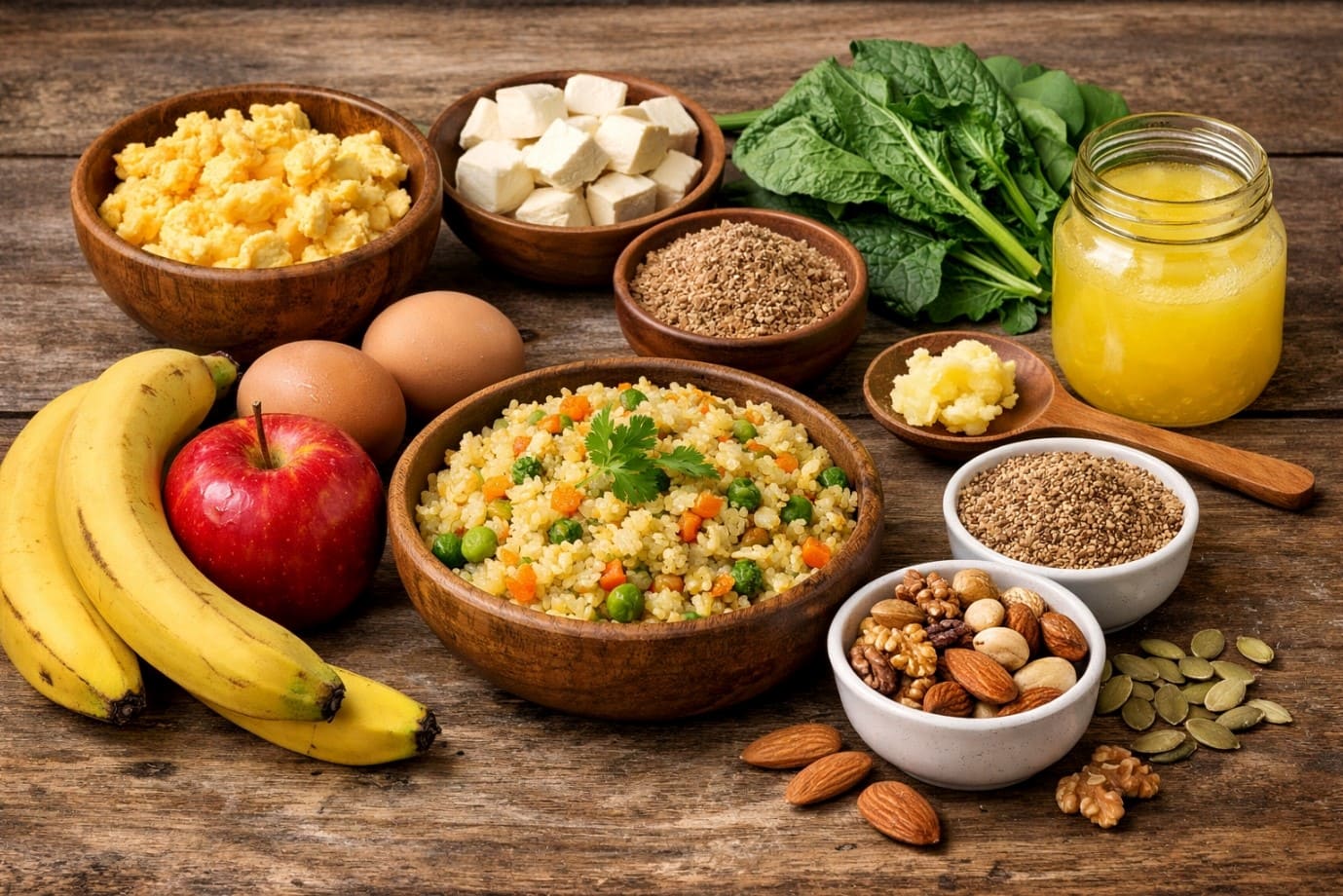
Eggs are among the best foods for brain development, rich in choline and protein—essential nutrients that support memory and brain cell formation. You can introduce well-cooked eggs after 6 months.
2. Vegetarian alternative:
Paneer or tofu are excellent healthy food for brain development, providing protein for growing brains.
3. Plant-Based DHA Sources:
Walnuts, chia seeds, and flaxseeds act as natural DHA brain development foods. These are important foods that help build brain structure and improve cognitive function.
4. Green Leafy Vegetables:
Spinach and other greens are rich in iron, a key nutrient in brain development of infants. Iron supports oxygen supply to the brain, making these vegetables essential brain development foods for infant. Spinach puree is easy to introduce.
5. Nuts & Seeds Powder:
Almond powder (after 8 months) is one of the best foods for brain development of infants, packed with healthy fats and vitamins. It supports memory and overall brain function.
6. Homemade Khichdi:
It is a perfect combination of carbs, protein, and fats, making it one of the most practical brain development foods in Indian diets. Adding vegetables and ghee enhances its value in nutrition.
7. Fruits (Banana, Avocado):
Fruits like banana and avocado provide energy and healthy fats, making them ideal foods for brain development. They also support overall growth and brain activity.
8. Desi Ghee:
It is rich in healthy fats that support brain cell function. Adding a small amount to meals boosts nutrition and enhances nutrient absorption.
9. Breast Milk / Formula:
It remains the most complete brain development food for infants, naturally rich in essential nutrients that support early infant brain development.
Including these diverse foods in your baby’s daily diet ensures a strong foundation for lifelong learning, memory, and intelligence.
Age-wise Diet Plan for Brain Development in Infants
Providing the right foods at the right stage is essential for infant brain development. An age-wise approach ensures your baby receives the correct nutrients at every milestone, supporting healthy brain development.
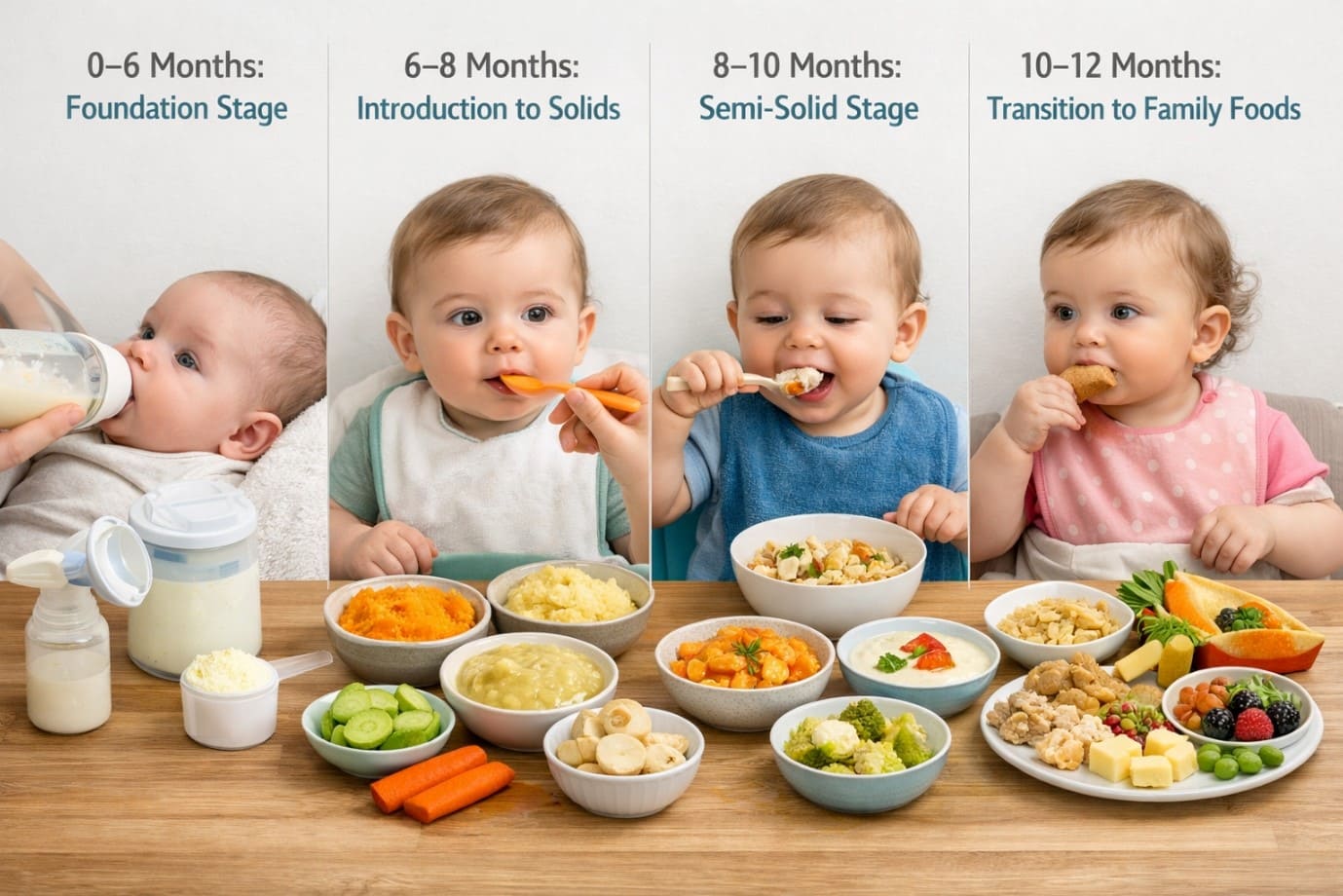
👉 0–6 Months: Foundation Stage
During this phase, breast milk or formula is the only recommended source of nutrition. It is the most complete brain development food for infants, naturally rich in essential fats, proteins, and vitamins. These nutrients play a key role in early brain development, especially in building brain cells and immunity.
👉 6–8 Months: Introduction to Solids
As solids begin, introduce smooth purees like dal, mashed fruits, and vegetables. These are gentle yet effective brain growth foods that provide iron and energy. Including such healthy food helps strengthen neural connections and supports early learning.
👉 8–10 Months: Semi-Solid Stage
At this stage, babies can handle thicker textures like khichdi and mashed foods. These are among the best foods for brain development, offering a balanced mix of carbs, protein, and fats. Adding small amounts of dry fruits for brain development (like powdered almonds) can further enhance nutrition.
👉 10–12 Months: Transition to Family Foods
Now your baby can start eating soft versions of family meals. Modified home-cooked meals become excellent brain development foods, ensuring consistent nutrition and steady cognitive growth.
👉 Sample Mini Chart
Age | Food Type | Examples |
0–6 Months | Liquid | Breast milk, formula |
6–8 Months | Purees | Dal puree, fruit mash, veggie puree |
8–10 Months | Semi-solids | Khichdi, mashed eggs, soft rice |
10–12 Months | Soft solids | Soft roti, dal, cooked vegetables |
Following this structured approach ensures your baby receives the right foods for brain development at every stage, laying a strong foundation for intelligence, memory, and overall growth.
Foods to Avoid for Healthy Infant Brain Development
While choosing the right brain development foods for infants is important, it is equally crucial to avoid certain foods that can negatively impact the overall mental development of an infant. Poor dietary choices during early years can interfere with healthy brain development.
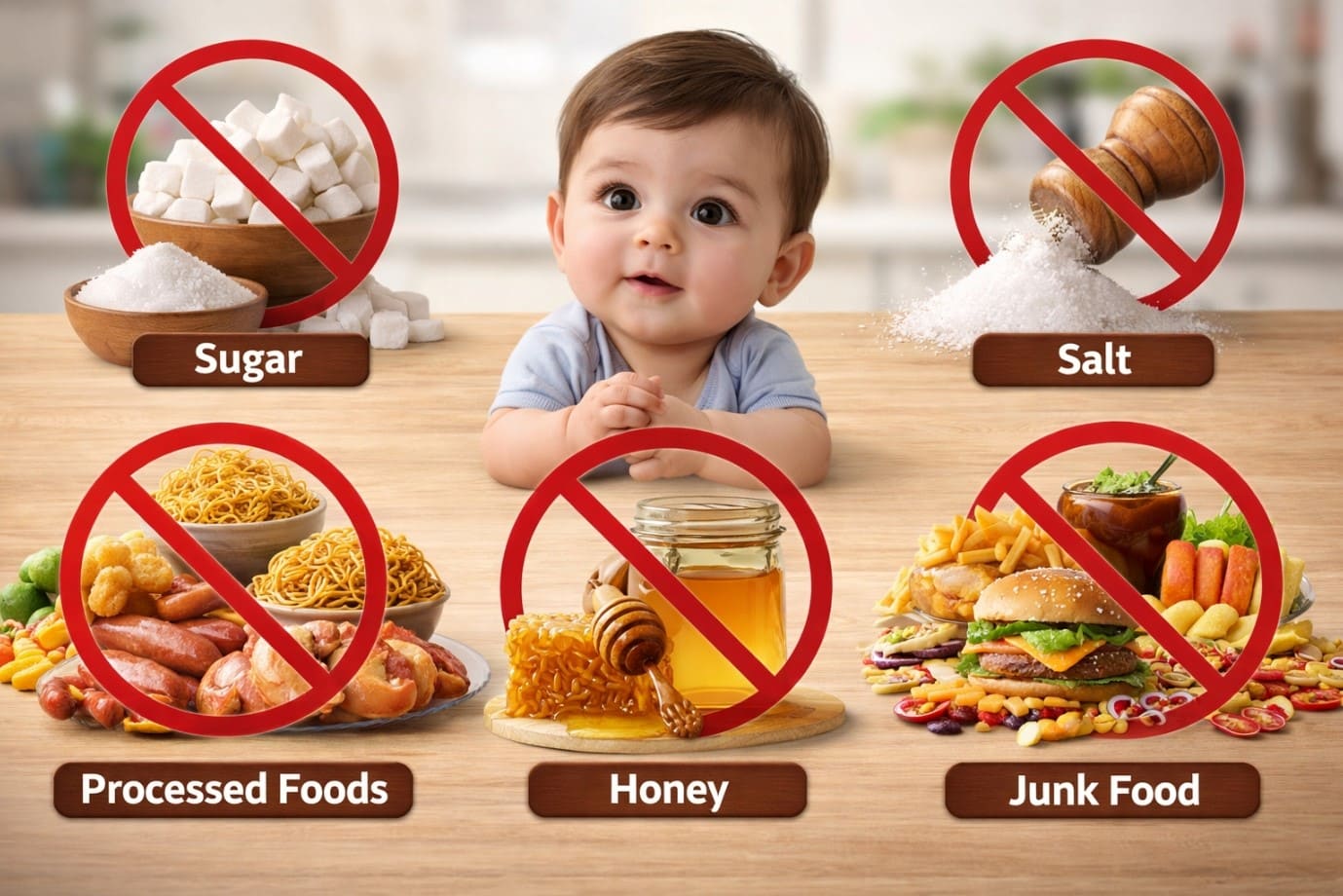
- Sugar: It is one of the biggest culprits. Excess sugar can affect concentration, disrupt energy levels, and may hinder the effectiveness of foods for brain development by reducing nutrient absorption. Babies do not need added sugar, as natural sweetness from fruits is sufficient.
- Salt: It should be strictly limited especially before the age of one. A baby’s kidneys are not mature enough to process excess sodium, and high salt intake can indirectly affect the infant brain development by putting stress on the body and reducing overall nutritional balance.
- Processed foods: These are often low in essential nutrients and high in preservatives, unhealthy fats, and additives. These foods lack the vital components needed for proper infant brain development, making them unsuitable for growing infants.
- Honey: Although natural, it should be avoided before one year due to the risk of botulism, which can harm a baby’s developing system.
- Junk food: It offers empty calories with no real nutritional value. Regular consumption can replace healthy brain development foods for infants, ultimately affecting long-term cognitive growth.
Avoiding these harmful foods helps ensure that your baby receives only the best support for healthy brain development.
Tips to Boost Infant Brain Development Naturally
Supporting infant brain development goes beyond just providing the right foods. A baby’s environment, daily interactions, and routines also play a crucial role in shaping its mental development. Here are some simple yet powerful ways to boost brain growth naturally.
- Responsive feeding is the first step. Paying attention to your baby’s hunger and fullness cues helps build trust and emotional security. This positive feeding experience enhances not only physical growth but also supports healthy infant brain development.
- Talking and interaction are equally important. Babies learn by listening and observing. Regularly talking, singing, and making eye contact helps strengthen neural connections and improves language development. These interactions significantly contribute to the mental development of an infant.
- Adequate sleep is often overlooked but is essential for infant brain development. During sleep, the brain processes information and forms memories. A well-rested baby is more alert, active, and receptive to learning, complementing the benefits of brain development foods.
- Lastly, play-based learning encourages curiosity and creativity. Simple activities like playing with toys, exploring textures, or interactive games stimulate the brain and improve problem-solving skills.
By combining proper nutrition with these daily habits, parents can create a strong foundation for healthy and holistic brain development.
Common Mistakes Parents Make that affect Infant Brain Development
Even with the best intentions, many parents unknowingly make mistakes that can affect the overall mental development of an infant. Being aware of these common errors can help ensure your baby receives the right foods and proper nutrition for brain development.
- One of the most common mistakes is delaying the introduction of solids beyond 6 months. This can lead to missed opportunities to provide essential nutrients for brain development, such as iron and healthy fats, which are crucial during this rapid growth phase.
- Another concern is the overdependence on packaged foods. While convenient, many packaged baby foods lack the freshness and nutrient density required for optimal infant brain development. Relying too much on them may reduce the intake of wholesome, home-cooked foods.
- Parents also often ignore iron-rich foods, which are vital for oxygen supply to the brain. A deficiency in iron can slow down cognitive development and impact learning ability, directly affecting infant brain development.
- Lastly, not introducing a variety of foods can limit exposure to different nutrients and textures. A diverse diet ensures a wide range of nutrients for brain development, supporting better growth and adaptability.
Avoiding these mistakes can make a significant difference in building a strong nutritional foundation for your baby’s brain and overall development.
Sample 7-Day Brain Developing Meal Plan
A structured weekly plan helps ensure your baby consistently receives a variety of brain development foods, supporting the overall mental development of an infant. Here’s a 7-day brain-developing meal plan with easily available Indian foods:
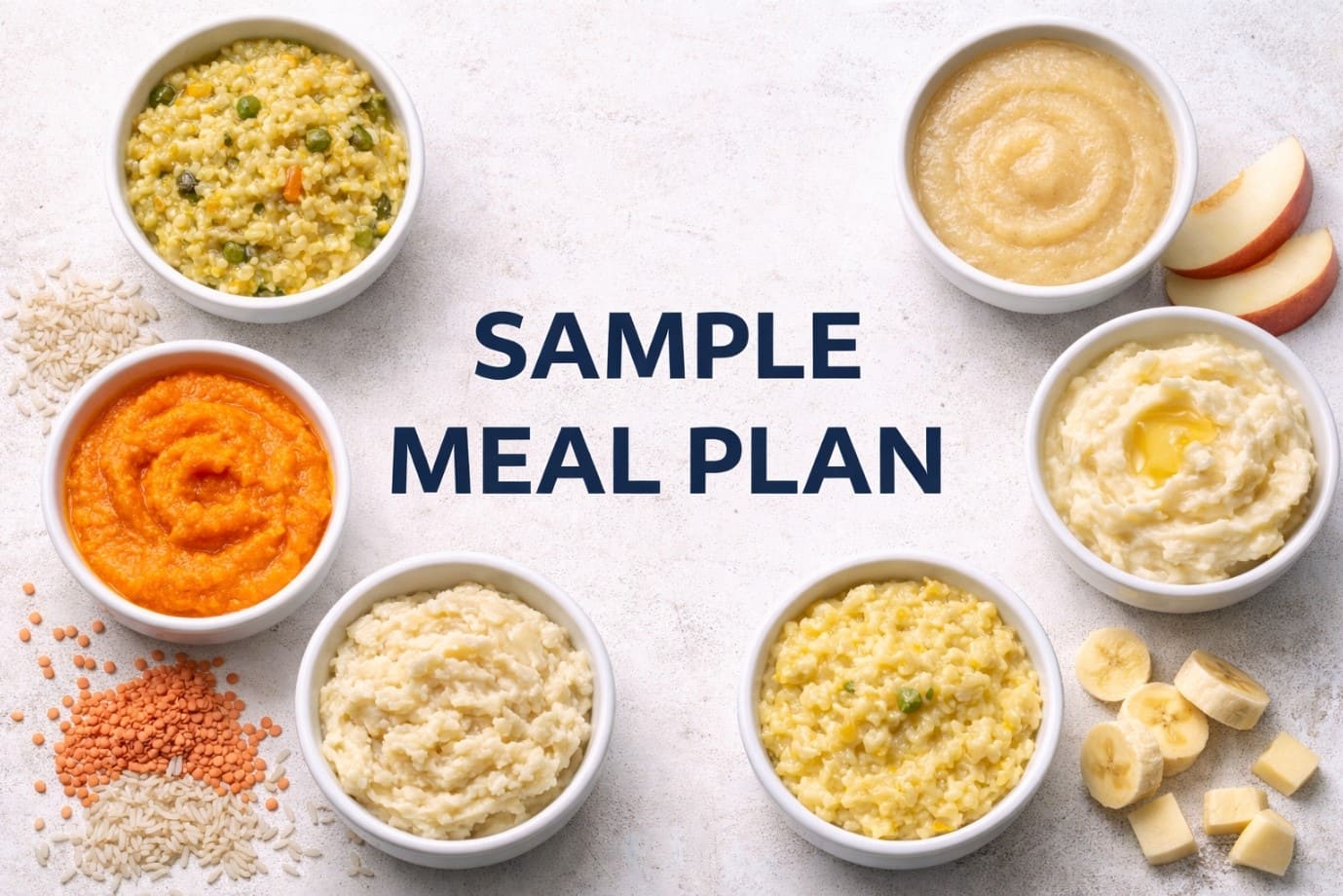
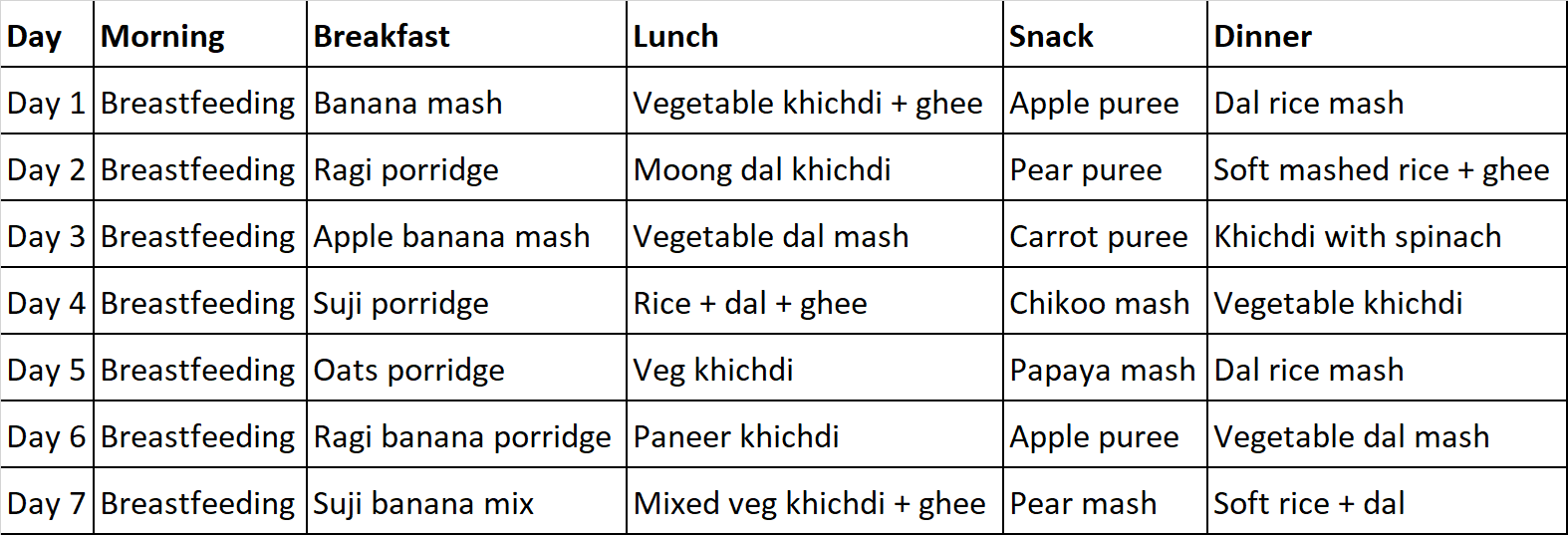
This meal plan includes a wide range of foods for brain development, combining grains, fruits, vegetables, and healthy fats to ensure balanced nutrition for brain development of infants. Regularly rotating these meals helps provide essential nutrients that support strong brain development in growing infants.
Following such a plan ensures your baby benefits from diverse brain development foods, laying a solid foundation for learning, memory, and overall growth.