Winter is that time of the year when cozy blankets, hot chai, and crispy pakoras start to feel irresistible. Unfortunately, this comfort often comes with extra kilos. Many people experience weight loss in winter becoming more difficult because the cold weather triggers stronger hunger signals, increases cravings for fried and sugary foods, and makes us move less. Shorter days and reduced sunlight also affect our mood and energy levels, leading to less physical activity and more emotional eating — all of which makes losing weight in the winter seem like a challenge.
However, what most people don’t realize is that winter is actually the best season to burn fat. Our bodies use more energy to stay warm, which boosts metabolism and helps us lose weight during winter more efficiently than in any other season. When combined with the right diet plan, this natural fat-burning advantage can lead to sustainable and healthy results.
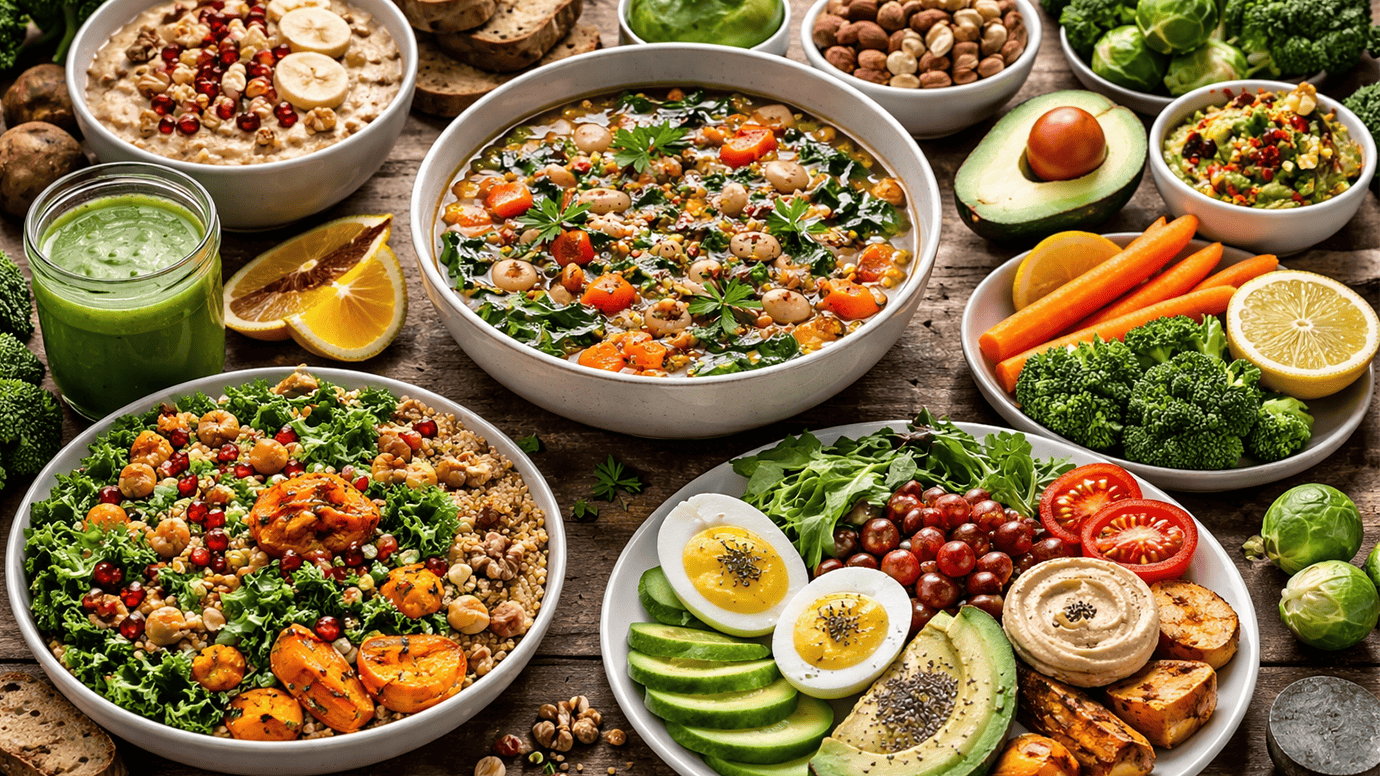
The secret lies in choosing the right foods. A well-designed weight loss diet plan for winter uses seasonal Indian ingredients like green leafy vegetables, citrus fruits, millets, nuts, and warming spices to keep the body nourished while supporting fat loss. Instead of starving or skipping meals, following a smart weight loss diet for winter allows you to enjoy warm, comforting meals while still losing weight in a healthy way.
This blog will show you how to eat right, stay active, and finally achieve effective weight loss in winter—without giving up your favorite seasonal foods.
Why Winter Is the Best Season for Weight Loss
Winter creates the ideal biological and nutritional environment for fat loss, which is why losing weight during winter is easier and more effective than in any other season. When supported by a proper winter diet plan for weight loss, the body responds faster and burns fat more efficiently.

Higher Metabolism in Cold Weather:
During winter, the body has to work harder to maintain its core temperature. This process, called thermogenesis, increases calorie burning even when you are resting. As a result, following a structured diet plan allows the body to burn fat more efficiently. This natural metabolic boost is one of the main reasons weight loss in winter happens faster compared to warmer months.
Brown Fat Activation:
Cold weather activates brown fat, a special type of fat tissue that burns stored fat to produce heat. This means your body uses excess fat as energy, helping you lose weight more effectively. When paired with a well-balanced diet, brown fat plays a powerful role in improving fat loss results.
Better Appetite Control:
In winter, dehydration is less common, which helps regulate hunger hormones. When the body is properly hydrated and well nourished, cravings reduce and portion control becomes easier. This makes losing weight in the winter more manageable when you follow a smart diet.
Seasonal Indian Foods Support Fat Loss:
Indian winters provide nutrient-rich foods like spinach, methi, carrots, amla, oranges, and millets. These foods are high in fiber, antioxidants, and plant protein, making them ideal for a healthy weight loss diet plan for winter. When included in a balanced meal plan, they keep you full, boost digestion, and support a sustainable winter weight loss diet.
By aligning your food choices with seasonal advantages, you can enjoy effective and lasting results while losing weight during winter naturally and safely.
Also Read: Weight loss diet plan for women
Common Mistakes that makes you Gain Weight in Winter
Many people struggle with losing weight during winter not because their bodies stop burning fat, but because of unhealthy seasonal habits. These small mistakes slowly add up and block progress, even if you follow a basic winter diet plan for weight loss.
Overeating Due to Cold:
Cold weather increases appetite because the body demands more energy to stay warm. However, this often leads to overeating rather than smart eating. Without mindful portions, weight loss in winter becomes difficult, even when meals are home-cooked.
Too Much Fried and Sweet Food:
Winter favorites like pakoras, samosas, and gajar ka halwa are delicious but loaded with refined flour, sugar, and unhealthy fats. These foods spike insulin and promote fat storage, making it harder to lose weight during winter.
Less Physical Activity:
Shorter days and chilly mornings reduce movement. People skip walks and workouts, which slows metabolism. This directly affects losing weight in the winter, even if food intake remains unchanged.
Excess Chai and Sugar:
Multiple cups of sweet chai add hidden calories and increase sugar cravings. This quietly blocks weight loss in winter and leads to belly fat.
Skipping Fruits and Salads:
Many people avoid cold fruits and raw vegetables, missing out on fiber and vitamins essential for fat burning. This weakens the impact of any winter diet plan for weight loss and slows digestion.
Avoiding these mistakes is the first step to sustainable winter fat loss.
You can also go through: Weight loss diet plan for men
How Winter Affects Your Metabolism & Fat Burning
Winter changes how your body functions internally, which directly impacts losing weight in the winter. Understanding these changes helps you design a smarter weight loss diet for winter and achieve better fat-burning results.
Thermogenesis Increases Calorie Burn:
In winter, the body produces heat through a process called thermogenesis. This process requires energy, which means more calories are burned just to keep the body warm. This natural increase in energy use makes losing weight in the winter easier, especially when you follow a balanced weight loss diet.
Hormonal Changes Influence Fat Storage:
Cold weather affects hormones that regulate hunger and fat. Levels of ghrelin (the hunger hormone) rise, while leptin (the fullness hormone) becomes less effective. This makes it harder to feel satisfied after meals and can slow weight loss in winter if eating is not well managed.
Cravings Increase in Winter:
Reduced sunlight and lower vitamin D levels can affect mood and appetite, increasing cravings for sweets and high-carbohydrate foods. These cravings can interfere with losing weight in the winter unless meals are planned carefully with enough protein, fiber, and healthy fats.
Why You Feel Hungrier:
Your body needs more fuel to stay warm, so hunger naturally increases. Without a structured weight loss diet for winter, this extra hunger can lead to overeating. But when you choose nourishing foods, you can still lose weight while staying energized and satisfied.
When you support your metabolism with warm, nutrient-dense foods, you help the body burn fat more efficiently and lose weight during winter in a healthy, sustainable way.
Principles of a Winter Diet Plan for Weight Loss
A successful winter diet plan for weight loss is not about eating less, but about eating right according to seasonal needs. When the body is nourished properly, losing weight during winter becomes easier, healthier, and more sustainable.
High Protein:
Protein plays a key role in fat loss by keeping you full and preserving muscle mass. Foods like dal, paneer, eggs, tofu, and Greek yogurt should be included in every weight loss diet plan for winter. High-protein meals also boost thermogenesis, supporting faster weight loss in winter.
Warm, Fiber-Rich Foods:
Warm meals made with vegetables, whole grains, and legumes improve digestion and reduce cravings. These foods keep the gut healthy and prevent overeating, which is essential for losing weight in the winter.
Seasonal Vegetables:
Leafy greens, carrots, cauliflower, and winter gourds provide fiber and antioxidants that support metabolism. They are the foundation of any effective diet for weight loss in winter.
Healthy Fats:
Nuts, seeds, ghee (in moderation), and olive oil help control hunger and hormone balance. These are important for a long-term winter weight loss diet.
Spices That Boost Metabolism:
Ginger, cinnamon, turmeric, and black pepper increase heat production and digestion, helping you lose weight during winter
Hydration in Cold Weather:
Even in winter, proper hydration is crucial. Warm water, herbal teas, and weight loss drinks in winter like jeera or ginger water prevent false hunger and support a healthy diet plan.
By following these principles, you create the perfect environment for sustainable fat loss using the right weight loss diet for winter.
Best Foods for Weight Loss in Winter
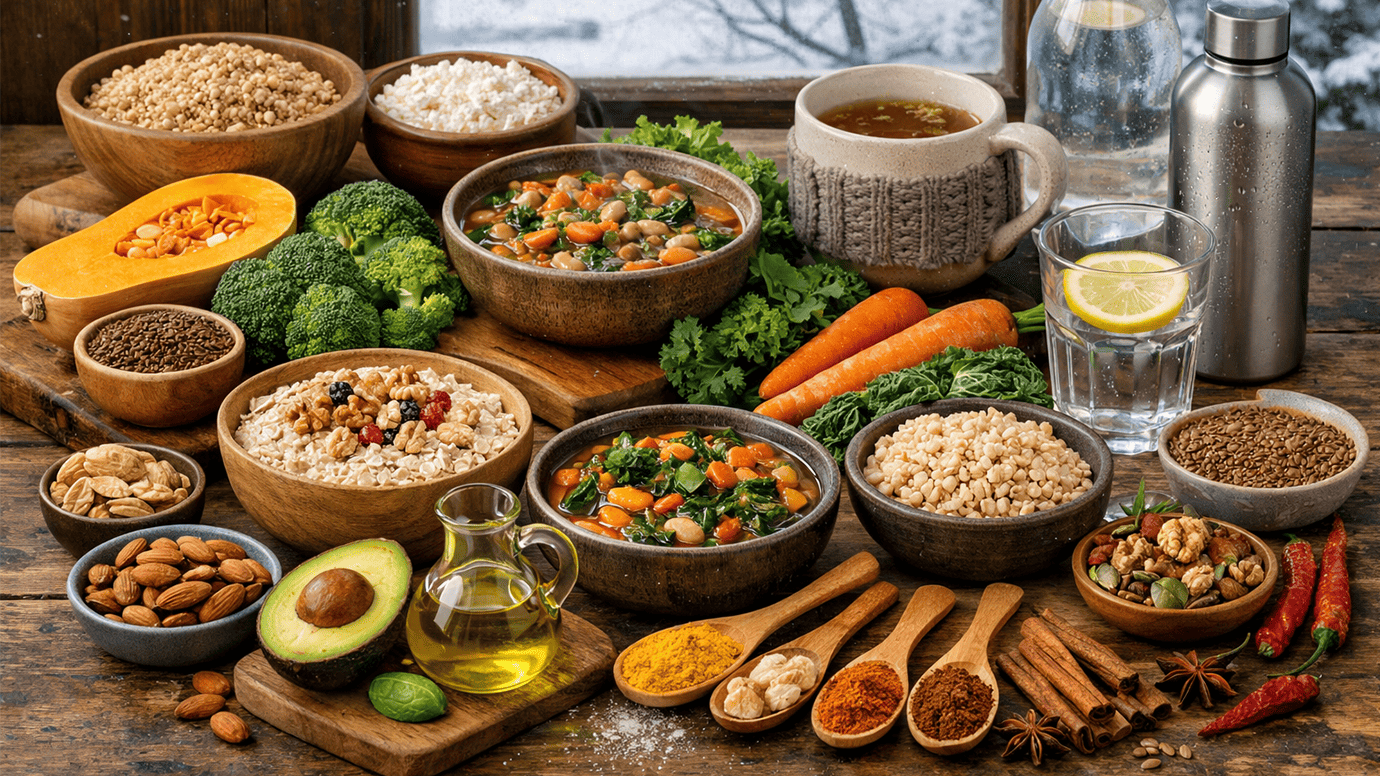
Choosing the right foods is the foundation of a successful winter diet plan for weight loss. Indian winters offer a wide range of nutrient-dense ingredients that naturally support fat burning and make losing weight healthier and easier.
Vegetables:
Vegetables like palak, methi, gajar, gobhi, bathua are rich in fiber, antioxidants, and essential minerals. These vegetables improve digestion, reduce bloating, and keep you full for longer. Including them in your diet supports better metabolism and steady weight loss, making them essential foods for weight loss in winter.
Fruits:
Guava, oranges, apples, amla, and pears provide natural sweetness, vitamin C, and fiber that control cravings and improve immunity. These fruits prevent winter weight gain while promoting fat loss when added to a balanced and nourishing winter weight loss meal plan.
Proteins:
Protein-rich foods such as paneer, eggs, dal, chana, tofu, and curd help preserve muscle mass and increase calorie burning through thermogenesis. Protein also keeps hunger in check, which is vital for losing weight in the winter. These foods form the backbone of an effective and sustainable weight loss diet for winter.
Winter Superfoods:
Til (sesame), flaxseeds, walnuts, peanuts, and jaggery (in moderation) provide healthy fats, minerals, and warmth to the body. These superfoods support hormonal balance and energy levels, helping you lose weight during winter without feeling weak. When used wisely in a diet for weight loss in winter, they enhance fat burning while keeping meals satisfying and nutritious.
Foods to Avoid During Winter for Weight Loss
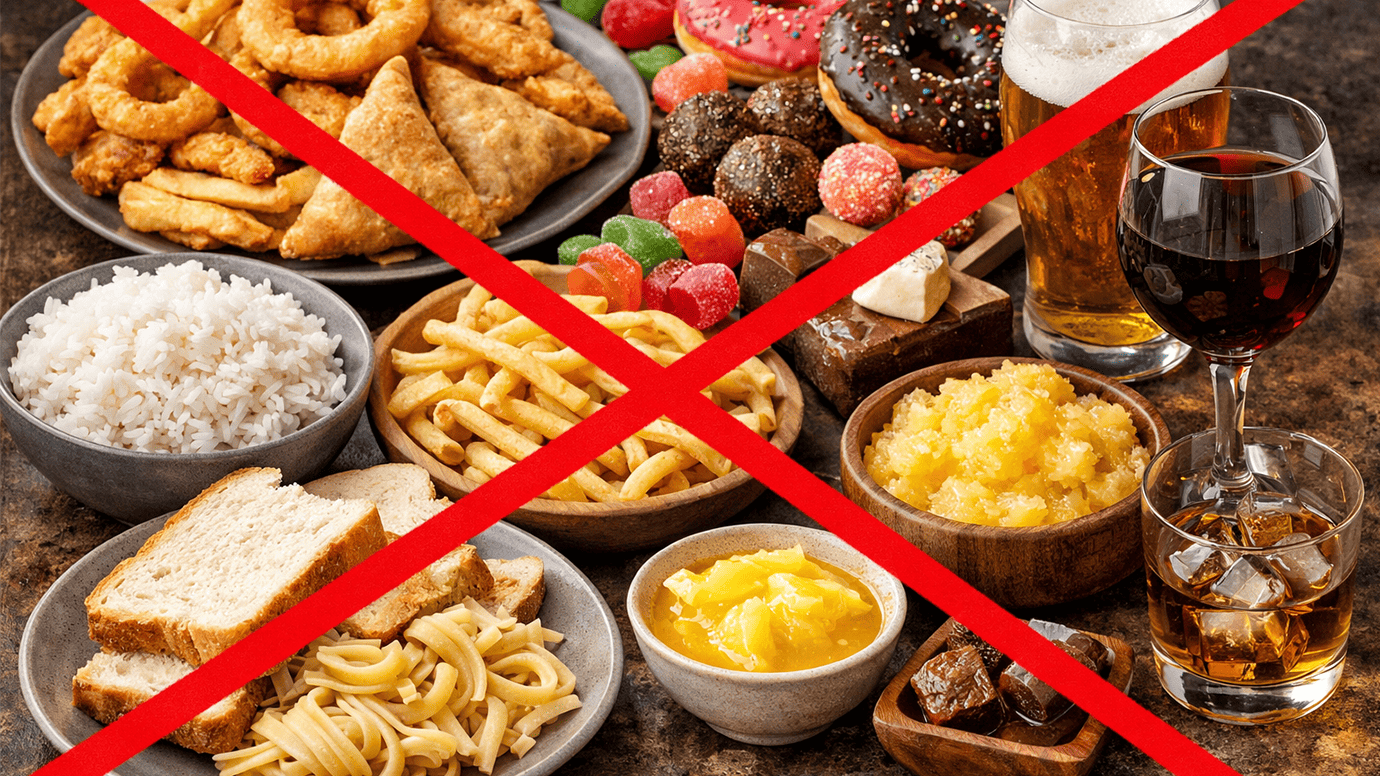
To make your winter diet plan for weight loss truly effective, you must avoid foods that slow fat burning and increase calorie storage. Even the best weight loss diet plan can fail if these items are eaten regularly while losing weight during winter.
Fried Snacks:
Fried winter snacks such as pakoras, samosas, kachoris, and bhajiyas are high in unhealthy fats and refined flour. These foods increase inflammation and slow down fat metabolism, making losing weight during winter much harder. Regular consumption of fried items can easily undo the benefits of a healthy winter diet plan for weight loss.
Sugary Sweets:
Winter desserts like gajar ka halwa, laddoos, and cakes cause rapid spikes in blood sugar followed by cravings and fatigue. These sugar highs encourage fat storage and interfere with weight loss in winter, even when you are following a structured weight loss diet plan.
Refined Carbohydrates:
Foods made with maida, such as white bread, biscuits, and pastries, lack fiber and keep you hungry soon after eating. This leads to overeating and disrupts any balanced diet plan, making losing weight in the winter more difficult.
Excess Butter and Ghee:
While healthy fats are important, too much butter and ghee adds unnecessary calories. Overconsumption slows fat loss and weakens the impact of a well-planned winter weight loss diet.
Alcohol:
Alcohol lowers metabolic rate, increases appetite, and disrupts fat burning. This makes it difficult to lose weight during winter and follow an effective diet, especially when healthier foods for weight loss in winter are needed for consistent results.
Avoiding these while choosing healthy foods for weight loss in winter will help you stay on track and achieve lasting results.
7-Day Winter Diet Plan for Weight Loss
A well-structured winter diet plan for weight loss helps you enjoy warm, nourishing meals while still supporting fat burning. This Indian vegetarian diet plan is designed to keep your metabolism active, reduce cravings, and help you lose weight during winter in a healthy and sustainable way.
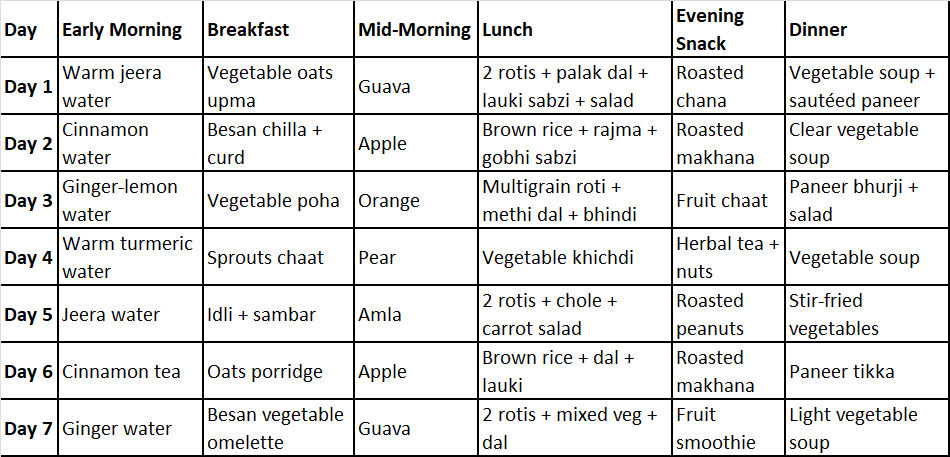
This weekly plan supports steady weight loss in winter by balancing protein, fiber, and warmth-giving foods. When followed consistently, it helps you stay full, energized, and focused on losing weight during winter without feeling deprived.
Best Weight Loss Drinks in Winter
Warm beverages play a powerful role in boosting metabolism and supporting fat burning during cold months. Including the right weight loss drinks can significantly improve the results of your winter diet plan for weight loss by controlling cravings, improving digestion, and increasing calorie burn. These drinks also help you lose weight during winter without feeling weak or deprived.

Ginger-Lemon Tea:
Ginger stimulates digestion and thermogenesis, while lemon helps detoxify the body. This combination improves fat breakdown and makes losing weight in the winter more effective.
Cinnamon Water:
Cinnamon stabilizes blood sugar levels and reduces sugar cravings. Drinking cinnamon water in the morning supports metabolism and enhances the effect of other weight loss drinks in winter.
Haldi Milk (Light):
A small amount of turmeric in warm low-fat milk reduces inflammation and improves recovery, which is important for maintaining an active winter diet plan for weight loss.
Green Tea:
Green tea contains antioxidants and caffeine that boost fat oxidation and energy expenditure, helping you lose weight during winter
Jeera Water:
Jeera (cumin) water improves digestion and prevents bloating, making it easier for the body to absorb nutrients and burn fat efficiently.
Adding these warm drinks to your daily routine will enhance your winter fat-loss results while keeping your body warm and well-hydrated.
Best Soups for Weight Loss in Winter
Vegetable Soup:
Low in calories and rich in fiber, vegetable soup keeps you full and hydrated while supporting fat loss.
Dal Soup:
High in protein, dal soup controls hunger and supports muscle maintenance during weight loss.
Tomato Soup:
Tomatoes are rich in antioxidants and low in calories, making this soup great for metabolism.
Spinach Soup:
Spinach provides iron, fiber, and nutrients that support energy and fat burning during winter.
Exercise & Lifestyle Tips for Winter Weight Loss
To get the best results from your winter diet plan for weight loss, it is important to support it with the right movement and lifestyle habits. Winter naturally increases calorie burning, and when combined with simple daily activities, it becomes easier to lose weight during winter in a healthy and sustainable way.
- Walking is one of the most effective winter exercises. A brisk walk in the morning or evening helps burn fat, improve circulation, and regulate blood sugar levels, all of which are essential for steady weight loss in winter. Even 30 minutes a day can make a noticeable difference.
- Yoga is especially helpful during colder months. Gentle stretches and breathing exercises improve digestion, reduce stress, and balance hormones that control appetite. This supports fat loss while keeping the body flexible and warm.
- Indoor workouts such as bodyweight exercises, skipping, or light strength training are ideal when it’s too cold to go outside. These workouts keep your metabolism active and complement your winter diet plan for weight loss by burning extra calories.
- Sleep plays a major role in fat loss. Poor sleep increases hunger hormones and cravings, making it harder to lose weight during winter. Aim for 7–8 hours of restful sleep to support recovery and hormone balance.
Getting enough sunlight and vitamin D improves mood, energy, and metabolism. Spending time in natural sunlight helps prevent winter fatigue and supports better weight loss in winter when paired with a healthy lifestyle.
Common Myths About Winter Weight Loss
Many people struggle with weight loss in winter because they follow outdated beliefs that do more harm than good. These myths often lead to overeating, slow metabolism, and unnecessary weight gain.
“You must eat more in winter”
Many people believe that cold weather requires eating large portions. While the body does use more energy to stay warm, it does not need excess calories. Overeating only leads to fat storage and slows weight loss in winter. What truly helps is eating balanced meals with enough protein, fiber, and nutrients.
“Fat is needed to keep the body warm”
This myth causes people to consume too much butter, ghee, and fried food. In reality, warmth comes from an active metabolism and good circulation, not from extra body fat. Too much dietary fat increases calorie intake and interferes with healthy weight loss in winter.
“Skipping meals helps you lose weight”
Skipping meals may seem like a shortcut, but it actually slows down metabolism and increases hunger later in the day. This often leads to overeating and poor food choices. Eating regular, well-balanced meals keeps blood sugar stable and supports consistent weight loss in winter.
Understanding and avoiding these common myths allows your body to function better and makes winter fat loss safer, easier, and more sustainable.