With more Indians becoming health-conscious, the interest in a high protein vegan diet has surged like never before. From young professionals aiming for fitness goals to mothers looking for healthier family meals, plant-based eating is no longer a trend—it’s becoming a mainstream lifestyle. Despite this shift, most Indian households still struggle with one major nutritional gap: protein deficiency. This is especially common among moms, kids, and vegetarians, whose daily meals are rich in carbs but low in high-quality protein. This is where choosing the best sources of protein for a vegan becomes essential.
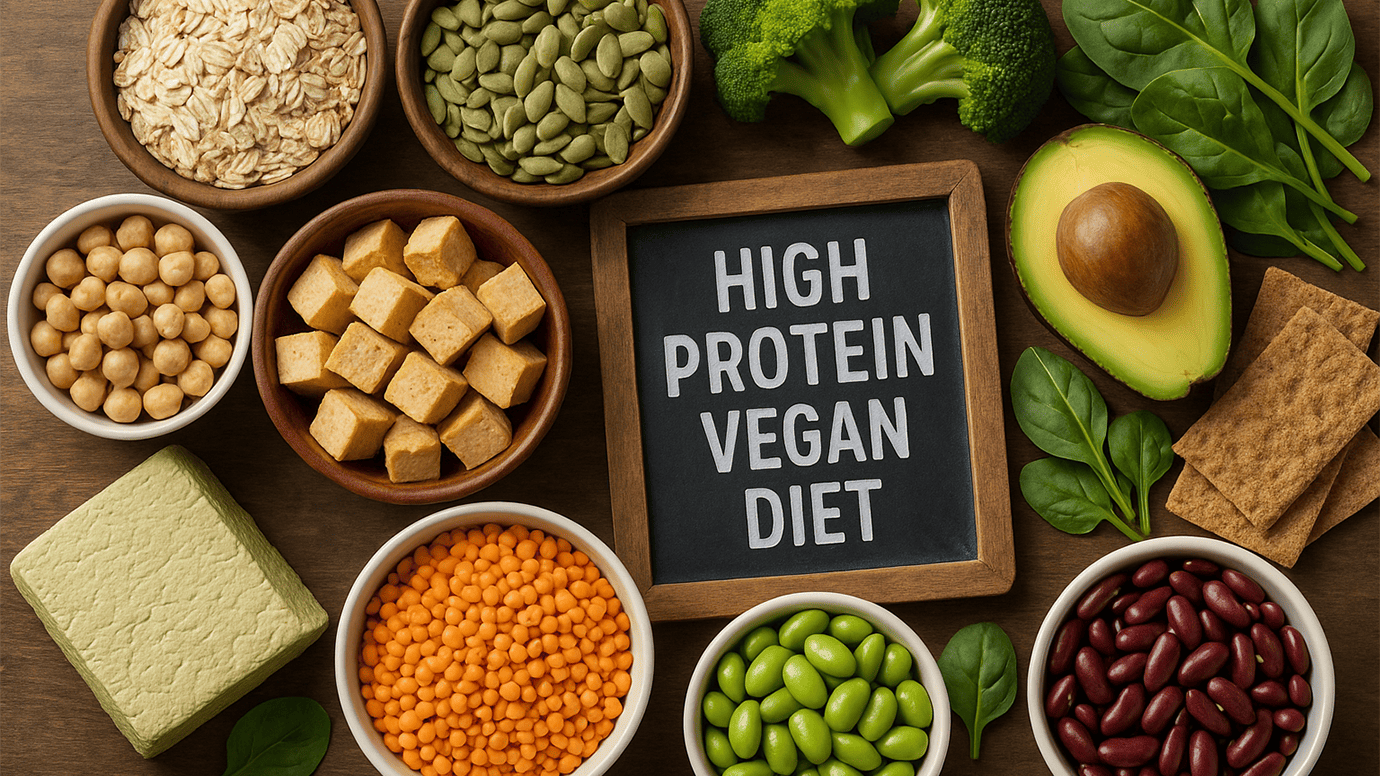
Many people believe that plant-based diets lack adequate protein. However, India is naturally blessed with some of the best vegan protein foods—from dals, legumes and millets to tofu, nuts, seeds, and even vegan protein powder options that support modern lifestyles. When used correctly, these vegan protein sources can easily meet the daily requirements for growth, recovery and long-term wellness. Whether you’re exploring vegan protein options for weight loss, or trying to understand the best forms of protein for vegans, this blog will serve as your complete guide.
In the sections ahead, we dive into simple, affordable and Indian-friendly protein foods for a vegan diet, making it easier for you to build balanced meals every day. Get ready for a practical, family-friendly guide to the best vegan protein sources tailored for Indian kitchens.
What Is a High Protein Vegan Diet?
A high protein vegan diet is a structured eating pattern that focuses on meeting daily protein needs entirely through 100% plant-based protein sources. It eliminates animal-based foods and instead relies on a wide range of high protein vegan foods that are easily available in Indian kitchens.
Meaning of a High Protein Vegan Diet
- It includes only plant-derived protein foods such as lentils, beans, tofu, millets, nuts, seeds and plant-based supplements like vegan protein powder.
- These foods qualify as the best vegan protein foods because they supply essential amino acids, vitamins and minerals without cholesterol or saturated fat.
Why “High Protein” Matters
Each life stage or health goal benefits from balanced protein intake:
Weight Loss & Fat Burning:
Higher protein keeps you full longer and boosts metabolism. This makes protein foods for vegan diet ideal for fat reduction.
Muscle Building & Recovery:
Fitness enthusiasts need the high protein vegan foods to repair muscles, improve strength and enhance performance.
Kids’ Growth & Immunity:
Children require best vegan protein foods to support height, brain development and immunity.
Post-Pregnancy Recovery:
Mothers need the best vegan protein sources for tissue repair, hormone balance and improved energy.
Managing Thyroid & PCOS:
Stable protein intake through quality vegan protein sources helps regulate metabolism and hormonal health.
Daily Protein Requirements
- Indian adults: 0.8–1.0 g protein per kg body weight
- Children: 1.0–1.5 g per kg, depending on age and activity
- These needs can be met with smart vegan protein options and meal planning.
Why Indians Need a High Protein Vegan Diet
India faces a major nutritional challenge—most households still follow a carb-dominant eating pattern. Meals often revolve around rice, chapati, potatoes and minimal dal, resulting in low protein intake across all age groups. This gap is even more visible in vegetarian and vegan families, where understanding and choosing the right high protein vegan foods becomes essential. A well-balanced high protein vegan diet helps bridge this nutritional deficit without changing cultural food habits.
Indian Dietary Patterns Make Protein Deficiency Common:
Traditional Indian plates lack adequate protein diversity. Even though plant protein is easily available, families rarely consume the best vegan protein foods or combine foods correctly for optimized absorption. By including high protein vegan foods like lentils, chickpeas, tofu, tempeh, nuts, seeds and millets, Indians can dramatically improve their overall nutrition.
Vegan Diet Fits Perfectly in Indian Culture:
India naturally supports plant-based eating. Many homes are already vegetarian, making it easy to adapt to vegan protein sources and incorporate into daily meals. From dal-chawal to idli-sambar and besan chilla, countless Indian dishes can be turned into low calorie high protein vegan meals with simple tweaks.
Health Benefits for the Entire Family:
A high protein vegan diet supports:
- Better metabolism, aiding weight loss and fat reduction
- Improved immunity, especially important for kids
- Balanced hormones, helping with PCOS, thyroid and insulin resistance
- Post-pregnancy recovery, where the best forms of protein for vegans, speed up healing and energy restoration
Easy, Affordable and Family-Friendly:
Unlike expensive animal protein, high protein vegan foods are affordable and widely available in Indian markets. Whether through homemade dishes or convenient vegan protein powder, families can enjoy multiple options without extra effort.
A thoughtfully planned vegan diet ensures health, affordability and cultural comfort—all on the same plate.
Also Read: Protein Rich Veg Diet for Growing Kids
Top High Protein Vegan Foods in India
India offers an incredible variety of high protein vegan foods that are affordable, delicious and naturally fit into everyday meals. Whether you’re aiming for weight loss, muscle gain or simply better nutrition, choosing the best vegan protein foods can transform your diet. Below is an easy-to-read breakdown of the best vegan protein sources available across Indian kitchens.
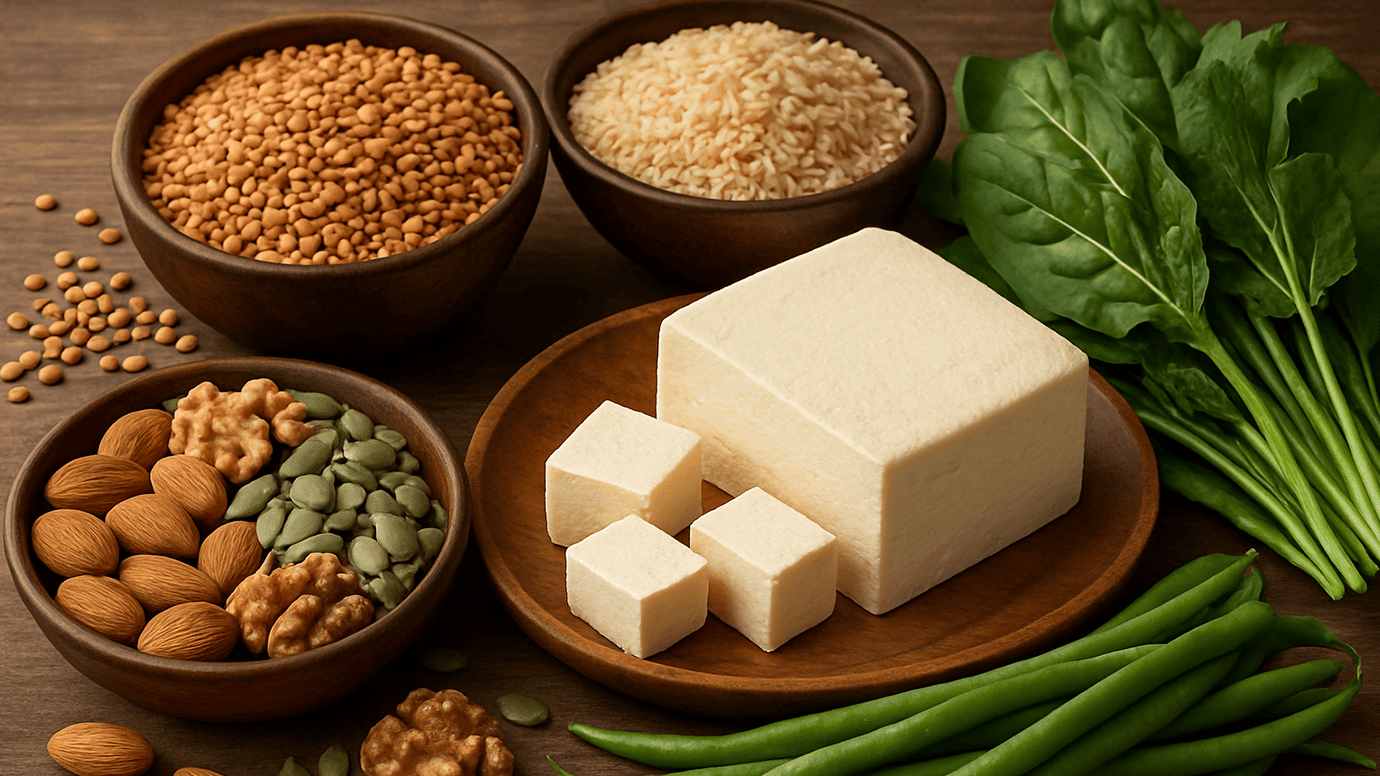
Legumes & Lentils – The Backbone of Indian Vegan Protein
Legumes are some of the best vegan protein sources because they are nutrient-dense, inexpensive and versatile. They form the foundation of any high protein vegan diet.
Moong Dal (24g protein per 100g):
A light, digestible dal used in khichdi, cheela, and soups. It is one of the most low calorie high protein vegan
Masoor Dal (25g per 100g):
Quick to cook and rich in iron. Works well in dal fry, soups and stuffed parathas.
Chana Dal (21g per 100g):
High in fiber and great for weight management. Use in dal tadka, cheela or halwa.
Rajma (22g per 100g):
One of the great sources of protein for vegans. Combine rajma with brown rice for complete amino acid balance.
Chole / Chickpeas (19g per 100g):
Ideal for salads, hummus and chole curry. Packed with minerals and steady energy.
Soybeans (36g per 100g):
One of the richest vegan protein sources on the planet. Use in soy curry, soy chaap, cutlets or tofu preparations.
Practical usage: dals for lunch, sprouted beans for breakfast, lentil soups for dinner—all are perfect protein foods for vegan diet planning.
Whole Grains – Powerful Partners for Complete Protein
Whole grains are essential in Indian meals and pair beautifully with legumes to create best forms of protein for vegans.
Quinoa (14g per 100g):
A complete protein. Use for pulao, salads or breakfast bowls.
Amaranth / Rajgira (13g per 100g):
Great for fasting days and rich in calcium. Use in parathas, laddoos and porridges.
Millets (Ragi, Bajra, Jowar – 9–12g per 100g):
Naturally gluten-free and mineral-rich. Make dosas, rotis, upma or khichdi.
Oats (17g per 100g):
Great for weight loss. Add to smoothies, uttapam batter or make savory oat chilla.
Why combine grains + lentils?
Dal + rice or millet + dal creates a more complete amino acid profile, giving you vegan protein options that rival animal sources.
Plant-Based Protein Foods Easily Available in India
These foods are versatile and often form the “modern” side of Indian vegan eating.
Tofu (8g per 100g):
A staple in high protein vegan foods. Great in bhurji, gravies, stir-fries and wraps.
Tempeh (19g per 100g):
Fermented soy, excellent for digestion and one of the best vegan protein sources for muscle gain.
Peanut Butter (25g per 100g):
A calorie-dense option perfect for kids and athletes. Add to smoothies, sandwiches or sauces.
Chickpea Flour / Besan (22g per 100g):
Used for cheela, dhokla, kadhi and pancakes—an everyday vegan protein
Plant Protein Powders:
Pea protein, rice protein and blended vegan protein powder provide high-quality, convenient vegan protein options, especially for weight loss and fitness.
Nuts & Seeds – Small Foods, Big Protein Punch
These nutrient-dense foods boost daily protein intake effortlessly.
Almonds & Peanuts (20–25g per 100g):
Perfect for snacks, smoothies and chutneys.
Chia Seeds (17g per 100g):
High in omega-3, calcium and fiber.
Flax Seeds (18g per 100g):
Great for thyroid balance and hormonal health.
Pumpkin & Sunflower Seeds (19–21g per 100g):
Among the best sources of protein for a vegan while supporting immunity and skin health.
Add them to salads, rotis, sabzis, chutneys and porridge.
High-Protein Vegetables – Add-On Boosters
While not very dense in protein, these veggies significantly enhance a high protein vegan diet.
Green Peas (5g per 100g):
Great in poha, curries and pulao.
Broccoli (3g per 100g):
Ideal for roasting, stir-fries and soups.
Spinach (3g per 100g):
Rich in iron and antioxidants.
Sweet Corn (3g per 100g):
Excellent for salads, soups and vegetable mixes.
These foods together ensure that your meals remain delicious, nutritious and aligned with your goal of maintaining a healthy, sustainable and protein-rich vegan lifestyle. By selecting smart vegan protein sources every day, you can easily meet your requirements while enjoying the flavors of Indian cuisine.
Sample 7-Day High Protein Vegan Diet Plan
A well-designed high protein vegan diet plan does not need to be complicated. With the right meals and smart combinations of high protein vegan foods, you can meet your protein goals effortlessly. Below is a 7-day, family-friendly meal plan featuring the best vegan protein foods, practical recipes, and a simple protein breakdown for each meal. All meals use affordable and easily available vegan protein sources, making this a sustainable daily routine.
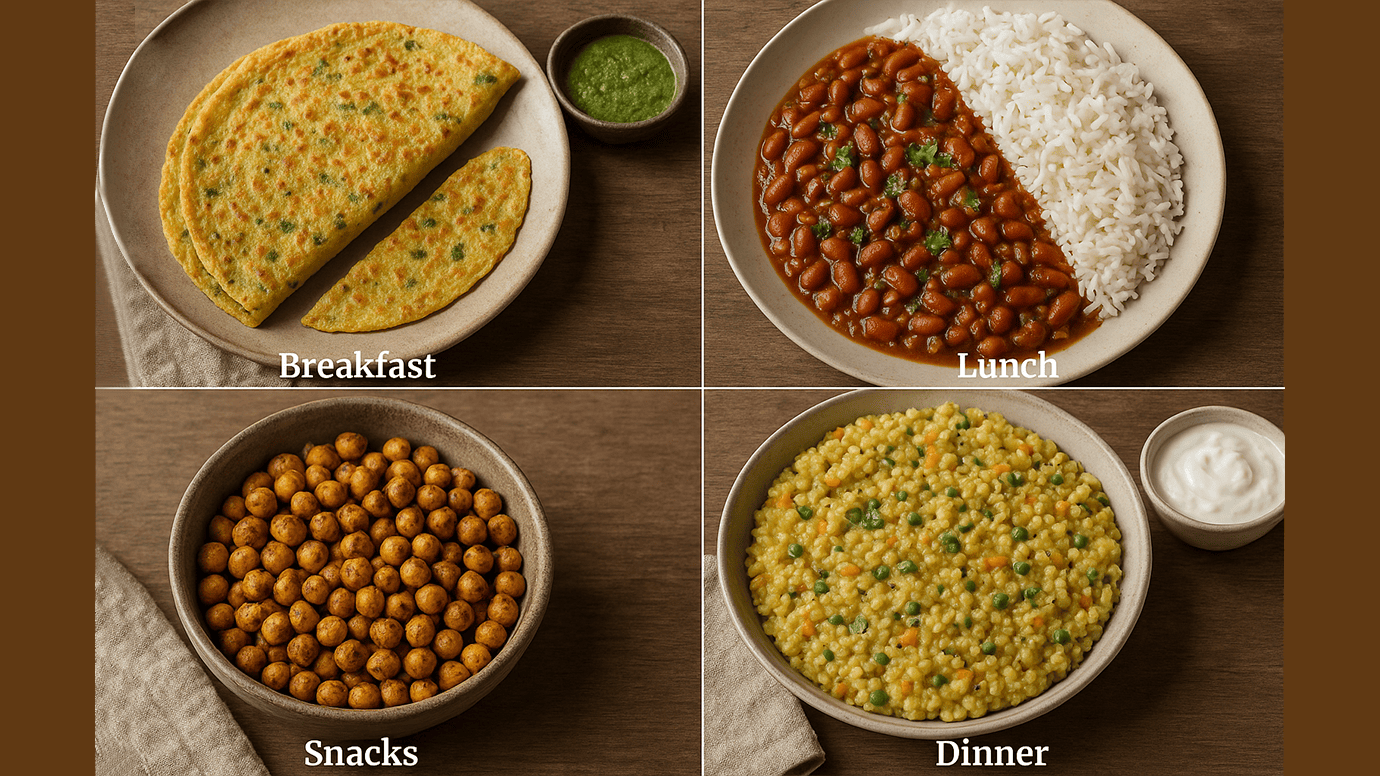
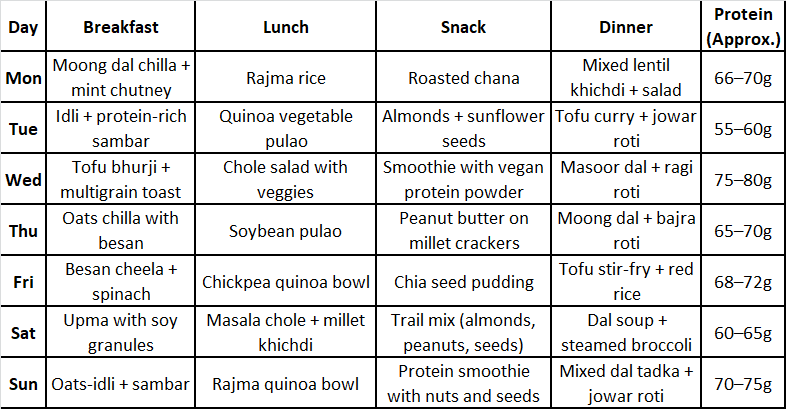
Why This Diet Plan Works
- It includes a variety of best vegan protein sources like dal, tofu, soy, tempeh, quinoa and legumes.
- Meals are easy, affordable and culturally familiar—ideal food habits in Indian homes.
- Snacks include low calorie high protein vegan choices that support weight loss without nutrient compromise.
- The combination of dals + millets provides some of the best forms of protein for vegans, ensuring a complete amino acid profile.
- Smoothies with vegan protein powder help boost intake for fitness, weight loss or busy lifestyles.
This 7-day routine provides consistent protein while keeping meals delicious and practical. By incorporating these great sources of protein for vegans, you can follow a balanced, results-driven, and sustainable plant-based lifestyle.
How to Increase Protein Intake in an Indian Vegan Diet
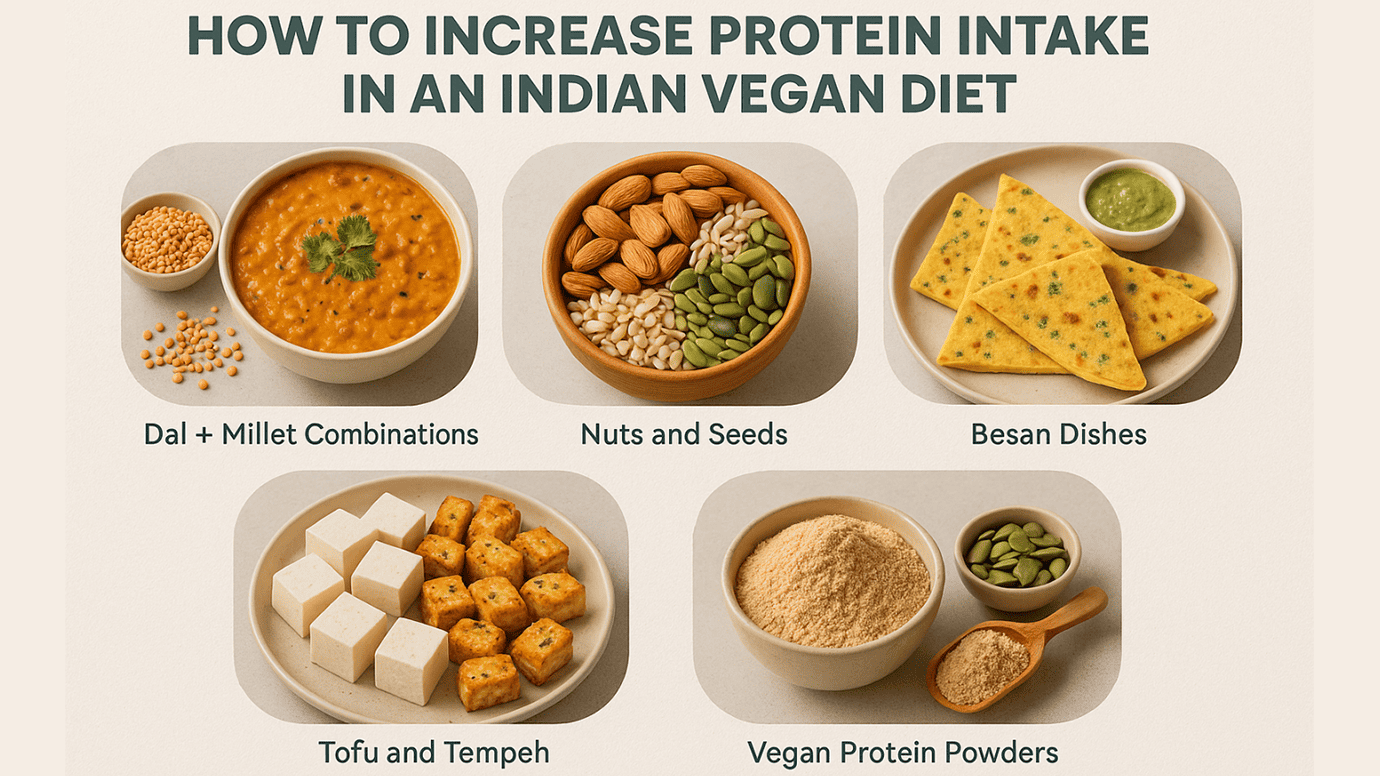
Boosting daily protein intake on a plant-based diet is simpler than most people think. Indian cuisine already provides a strong foundation of high protein vegan foods, but using them wisely can make your meals significantly more nourishing. Here are practical, everyday strategies to help you meet your protein goals using the easily available vegan protein sources.
Combine Protein Sources Smartly:
Mixing dals with millets—like moong dal + bajra roti or rajma + quinoa—creates the best forms of protein for vegans. This food pairing offers complete amino acids and forms the backbone of a successful high protein vegan diet.
Add Nuts & Seeds to Everyday Dishes:
Sprinkle almonds, peanuts, pumpkin seeds or chia seeds on salads, upma or smoothies. These ingredients are among the great sources of protein for vegans and add healthy fats too.
Use Besan in Creative Ways:
Besan is one of the best sources of protein for a vegan. Make besan chilla, cheela, pancakes or add it to gravies to increase the protein content of regular meals.
Replace Paneer with Tofu or Tempeh:
Tofu and tempeh are nutrient-rich vegan protein options that work wonderfully in stir-fries, curries and wraps, helping you maintain a low calorie high protein vegan
Include Sprouts Regularly:
Sprouted moong, chana or matki provide high-biological-value protein for vegan diet patterns and improve digestion.
Use Plant-Based Protein Powders:
For busy professionals, moms, or weight loss clients, adding vegan protein powder to smoothies or shakes offers convenient, clean and high-quality vegan protein
By combining these strategies, you can effortlessly meet your protein needs with wholesome, affordable and Indian-friendly foods.
Benefits of a High Protein Vegan Diet
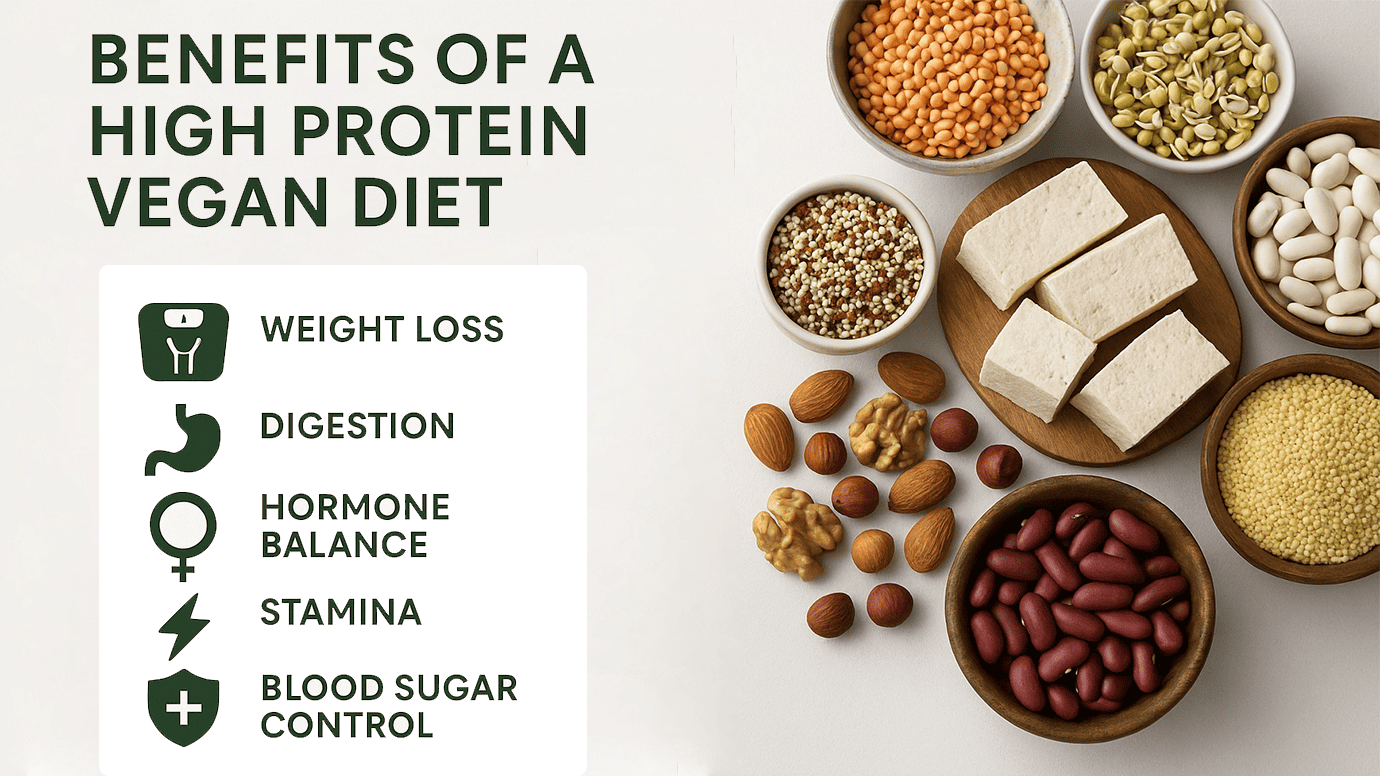
A high protein vegan diet offers a wide range of health benefits for individuals of all ages. By incorporating a variety of high protein vegan foods, you not only improve overall nutrition but also support long-term wellness. Indian cuisine naturally includes many of the best vegan protein foods, making it easier to enjoy these advantages without major lifestyle changes.
Supports Weight Loss & Fat Burning:
High-protein meals help keep you full for longer, reducing unnecessary snacking. This makes protein foods for vegan diet patterns especially effective for fat loss. Foods like tofu, lentils and quinoa are excellent choices that accelerate metabolism.
Reduces Cravings & Improves Satiety:
Including the best sources of protein for a vegan—like beans, millets and nuts—helps regulate appetite. Balanced meals prevent sugar cravings and overeating.
Enhances Digestion:
Plant-based proteins are naturally rich in fiber. When you consume the best vegan protein sources, digestion improves, bloating reduces and gut health strengthens.
Balances Hormones (PCOS & Thyroid):
Foods such as tempeh, sprouts and legumes are great sources of protein for vegans. Their nutrient profile helps balance insulin and thyroid hormones, making them ideal for PCOS and hypothyroidism management.
Boosts Stamina for Mothers:
Protein is crucial for energy, tissue repair and recovery. Tofu, millets and vegan protein powder offer convenient options for busy mothers who need sustained energy throughout the day.
Supports Children’s Growth & Immunity:
For kids, including vegan protein sources like dal, soy and nuts helps build muscles, improve immunity and support height development.
Stabilizes Blood Sugar Levels (Diabetes-Friendly):
Stable protein intake slows glucose absorption, making best forms of protein for vegans ideal for diabetes prevention and control.
Common Mistakes Indians Make & How to Avoid Them
While shifting to a high protein vegan diet, many Indians unknowingly make nutritional mistakes that limit their progress. Understanding these pitfalls—and how to avoid them—can help you make the most of high protein vegan foods and build a well-balanced lifestyle.
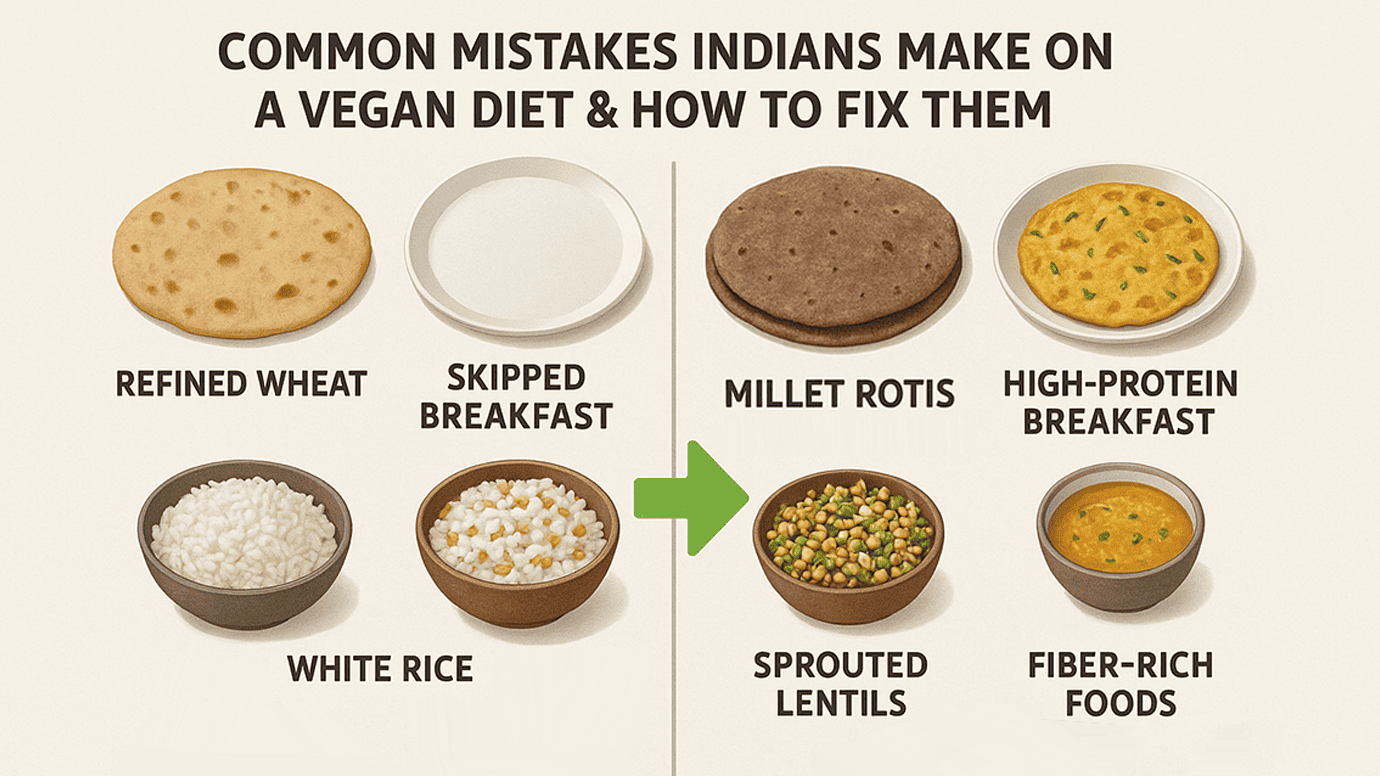
Over-Dependence on Wheat & Rice:
Most Indian meals revolve around chapati and rice, leaving little room for the best vegan protein foods like millets, dals and legumes. Rotating grains—such as bajra, ragi and jowar—adds diversity and provides the best forms of protein for vegans.
Not Soaking or Sprouting Dals:
Skipping soaking reduces nutrient absorption. Sprouting transforms basic legumes into great sources of protein for vegans, improving digestion and boosting amino acid quality. This is especially important in protein foods for vegan diet
Skipping Breakfast:
Missing breakfast leads to cravings and overeating later. Starting your day with best vegan protein sources like besan chilla, tofu bhurji or smoothies with vegan protein powder improves satiety and energy.
Low Fiber Intake:
Despite eating vegetarian meals, many Indians consume low fiber due to refined grains. Adding vegetables, fruits, oats and seeds supports better digestion and complements your vegan protein options
Not Balancing Macros:
A strong vegan diet is not just about carbs. A balanced plate includes healthy fats, whole grains and vegan protein sources like lentils, tofu and nuts.
Not Drinking Enough Water:
High-protein meals require more hydration. Adequate water improves digestion and nutrient absorption.
Believing Myths like “Vegan Diets Cause Weakness”:
This myth exists because people don’t include the best sources of protein for a vegan such as soy, quinoa, millets and legumes. When meals use low calorie high protein vegan ingredients smartly, strength and energy actually improve.
By avoiding these mistakes, you can fully enjoy the benefits of a strongly built, wholesome vegan protein lifestyle.