
Is intermittent fasting simply about skipping meals or can the timing of your meals make a difference to your health? In recent years, intermittent fasting has become a popular eating pattern among people who want to manage their weight, improve their eating habits and follow a more structured daily routine. Unlike traditional diets that mainly focus on what you eat or how many calories you consume, intermittent fasting focuses on when you eat and when you take a break from eating.

In simple terms, intermittent fasting involves alternating between periods of eating and periods of fasting. During the eating window, you consume your regular meals, while the fasting window is the time when you avoid food. Depending on your lifestyle and preferences, you can choose from different types of intermittent fasting, such as the 12:12, 14:10 or 16:8 method. The right schedule depends on your daily routine, nutritional needs and overall health.
Many people explore intermittent fasting to lose weight, but it is important to understand that results vary from person to person. Fasting alone does not guarantee weight loss, balanced meals, suitable portion sizes, physical activity and consistent habits also matter.
If you are interested in intermittent fasting, this blog will help you understand how it works, its potential benefits, what to eat during intermittent fasting, and the precautions to consider before getting started. You will also learn how to approach a proper routine and understand what would be the best time for intermittent fasting for your individual needs.
How Does Intermittent Fasting Work?
Understanding how does intermittent fasting work starts with knowing that it focuses on the timing of meals rather than just the food you eat. Intermittent fasting divides your day into two main periods: the eating window and the fasting window. During the eating window, you consume your meals and snacks, while the fasting window is the period when you avoid food.
Here is what happens in your body during these periods:
- During the eating window: Your body gets energy from the food you eat and stores some of it for later use.
- During the fasting window: As time passes after your last meal, your body gradually uses stored energy, including glycogen and fat, to meet its needs.
- Fasting and metabolism: Your body continuously adjusts how it uses different energy sources. However, there is no exact fasting hour when everyone suddenly starts burning large amounts of fat or experiences a special detoxification effect.
For people considering intermittent fasting to lose weight, the overall balance between energy intake and energy expenditure remains important. Eating nutritious foods, including protein, vegetables, fruits and whole grains, can support better results than relying on fasting alone.
Even if you follow a strict intermittent fasting schedule, consuming more energy than your body uses may prevent weight loss. The hours of intermittent fasting matter, but food quality, portion sizes, activity levels, sleep and consistency matter too. A suitable intermittent fasting diet should fit your lifestyle and nutritional needs rather than simply involve longer fasting periods.
Popular Types of Intermittent Fasting
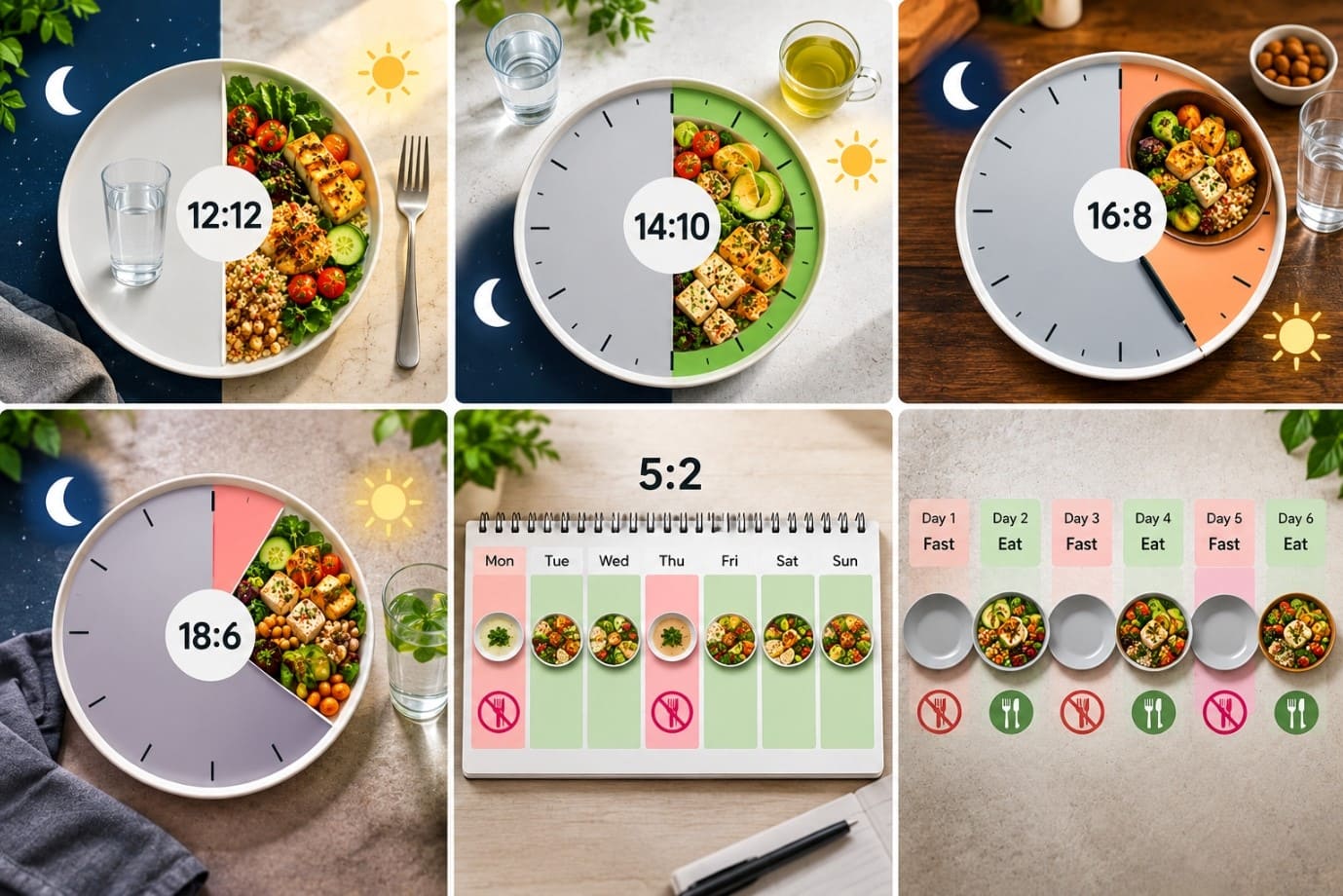
There are several types of intermittent fasting and each follows a different pattern of eating and fasting. Some methods are easier to fit into a daily routine, while others involve longer periods without food. Understanding these options can help you choose an approach that suits your lifestyle, nutritional needs and health goals.
👉 12:12 Intermittent Fasting
12:12 intermittent fasting involves fasting for 12 hours and eating within a 12-hour window. For example, you could finish dinner at 7 PM and have breakfast at 7 AM the next day. This overnight routine may be a practical starting point for healthy adults who want more structure without following a restrictive eating pattern.
👉 14:10 Intermittent Fasting
With 14:10 intermittent fasting, you fast for 14 hours and eat within a 10-hour window. For example, your eating window might run from 9 AM to 7 PM. This approach offers more fasting time than the 12:12 method without requiring the longer fasts used in some other plans.
👉 16:8 Intermittent Fasting
16:8 intermittent fasting means fasting for 16 hours and eating within an 8-hour window. It is popular because some people find it easier to manage fewer eating hours. However, it is not suitable for everyone and longer fasting does not automatically produce better results.
👉 5:2 Fasting Method
The 5:2 fasting method involves eating normally on five days of the week and substantially reducing energy intake on two non-consecutive days. These reduced-intake days are not necessarily complete fasts. Careful planning is important to maintain adequate nutrition.
👉 Alternate Day Fasting and 18:6 Intermittent Fasting
Alternate day fasting alternates usual eating days with fasting or very low intake days. It is more restrictive and may be difficult to maintain. 18:6 intermittent fasting, which involves 18 fasting hours and a 6-hour eating window, is another option but may make it harder to meet nutritional needs.
Ultimately, the best intermittent fasting schedule is not necessarily the one with the most hours of intermittent fasting. If you are considering intermittent fasting to lose weight, focus on balanced meals, adequate nutrition and a routine you can maintain safely. The best time for intermittent fasting depends on your daily schedule and individual health needs.
Potential Benefits of Intermittent Fasting
The growing interest in intermittent fasting benefits comes from its potential to support weight management, improve certain health markers and create a more structured eating routine. However, the results are not the same for everyone. The benefits often depend on food choices, overall energy intake, lifestyle habits, and whether the eating pattern is suitable for the individual.

👉 May Support Weight Management
One of the main benefits of intermittent fasting is that a defined eating window may help some people reduce unnecessary snacking and overall calorie intake. This can support weight loss when it creates a sustainable energy deficit. However, fasting alone does not guarantee weight loss.
👉 May Improve Certain Metabolic Markers
Some studies suggest that intermittent fasting may improve markers such as blood glucose, insulin levels and blood pressure in certain people. These effects can vary and improvements may partly result from weight loss rather than fasting itself. People with diabetes should seek medical advice before changing their eating pattern.
👉 Can Simplify Meal Planning
Following an intermittent fasting schedule may make daily meal planning easier for people who prefer fewer eating occasions. Choosing suitable fasting hours and planning balanced meals in advance can help establish a consistent routine. However, eating enough nutrients remains important during intermittent fasting.
👉May Offer Potential Long-Term Health Benefits
Researchers are studying how different types of intermittent fasting, including alternate day fasting, may affect long-term health. While early findings are promising for some outcomes, strong evidence that fasting prevents major diseases or extends human lifespan is still lacking.
To get the most from a suitable intermittent fasting diet, focus on adequate hydration and the balanced meals containing protein, fibre-rich vegetables and whole grains. There is no universally best time for intermittent fasting, it should prioritise safety, nutritional needs and a routine you can maintain comfortably. If you are a female and are struggling to loose weight, Click Here to read our dedicated blog for it and simplify your weight loss journey.
What to Eat During Intermittent Fasting
Knowing what to eat during intermittent fasting is just as important as deciding when to eat. While fasting focuses on meal timing, your food choices help provide the energy, protein, vitamins and minerals your body needs. A balanced Indian intermittent fasting diet plan can include familiar home cooked meals without requiring expensive ingredients or giving up your favourite foods.
For a balanced intermittent fasting diet, try to include a variety of nutritious foods:
- Protein-rich foods: Include dal, rajma, chickpeas, paneer, tofu, curd, eggs, fish or lean meat to support muscle maintenance and keep you satisfied.
- Whole grains: Choose whole-wheat roti, oats, brown rice and millets to provide energy and fibre.
- Vegetables: Add seasonal sabzi, leafy greens and fresh salads to increase your intake of fibre, vitamins and minerals.
- Whole fruits: Enjoy guava, apples, oranges, papaya and other seasonal fruits instead of relying mainly on fruit juices.
- Healthy fats: Include nuts, seeds and moderate amounts of cooking oils as part of balanced meals.
- Fluids: Drink enough water throughout the day. Unsweetened tea, black tea, green tea or black coffee may fit some fasting routines, depending on individual tolerance and medical needs.
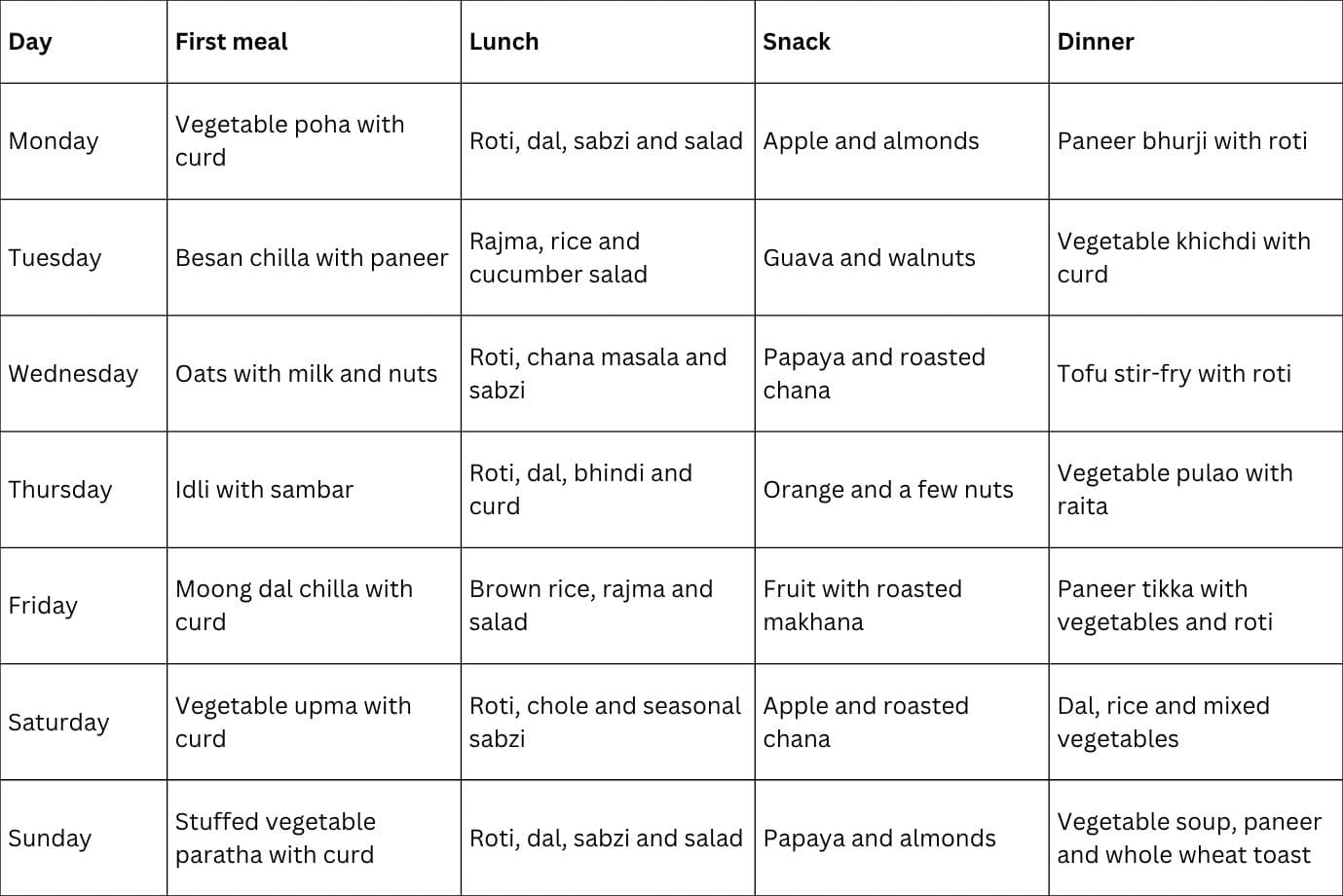
7-Day Sample Intermittent Fasting Diet Plan
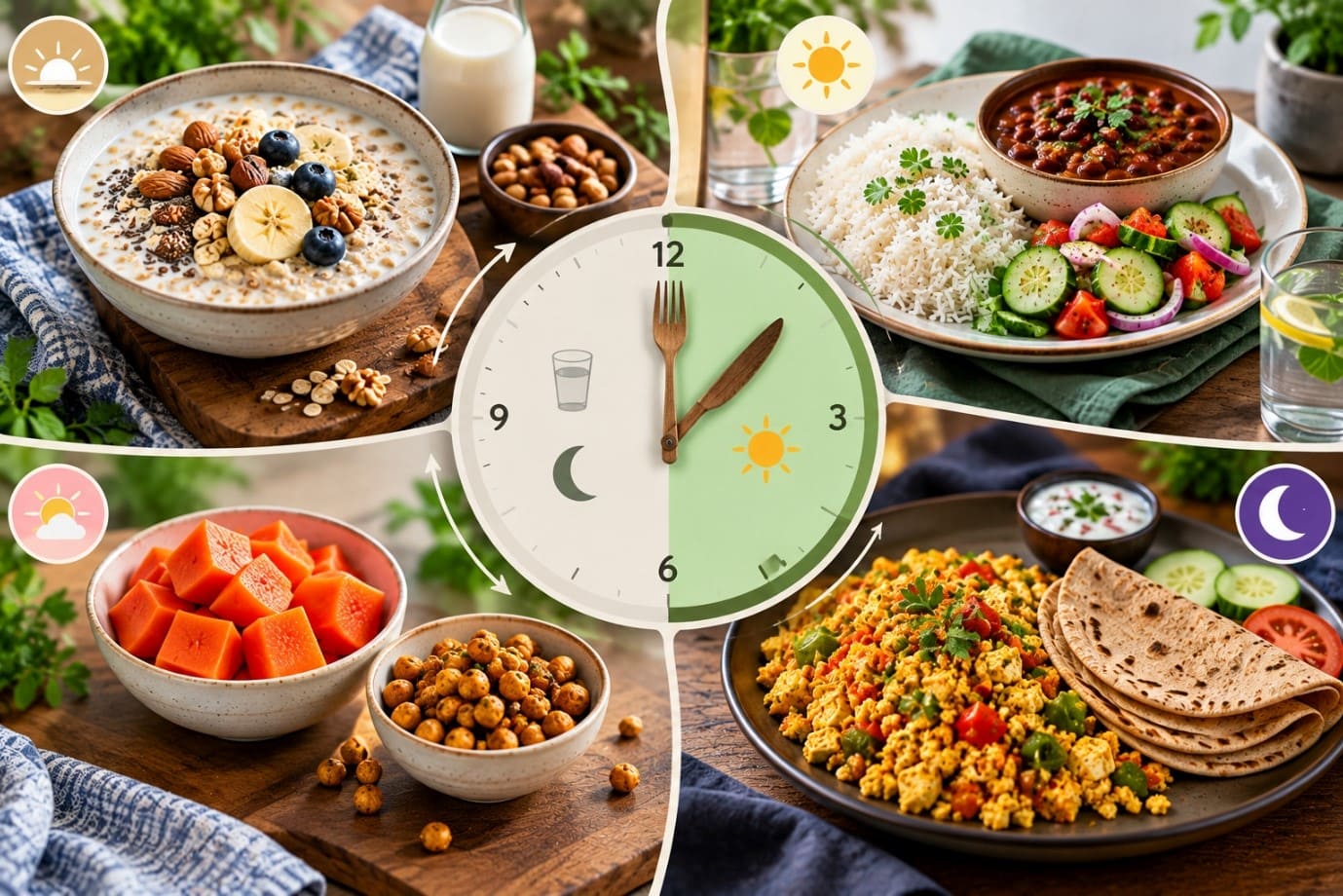
This example shows how an Indian eating pattern can fit into an eating window. It is illustrative, not a personalised prescription. Adjust portions and timing according to your nutritional needs, health, activity level and chosen intermittent fasting schedule.
Make Your Eating Window Count
Whether you follow 12:12, 14:10 or 16:8, your goal should be to meet your nutritional needs rather than simply maximise the hours of intermittent fasting. The best foods to eat after fasting are balanced options containing protein, fibre-rich carbohydrates and healthy fats.
Avoid treating fasting as permission to overeat fried snacks, sugary drinks or ultra-processed foods. A well-planned vegetarian diet can provide adequate nutrition, but variety and sufficient protein are important. If you are considering intermittent fasting to lose weight, focus on sustainable eating habits rather than extreme restrictions.
Also Read: Winter Diet Plan for Weight Loss
How to Start Intermittent Fasting Safely
If you are new to intermittent fasting, starting slowly is better than immediately following a strict routine. For beginners, the goal should be to develop healthy, sustainable habits rather than push your body through long periods without food.

Here are six practical steps to get started safely:
- Check whether intermittent fasting is suitable for you. If you have diabetes, a history of eating disorders or other medical conditions, consult a healthcare professional before starting. Pregnant or breastfeeding women and children should generally avoid restrictive fasting.
- Build balanced eating habits first. Include protein, whole grains, vegetables, fruits and healthy fats in your regular meals before changing your eating schedule.
- Start with a comfortable overnight break. If fasting is appropriate for you, begin with a manageable interval, such as 12 hours overnight, instead of jumping straight into 16:8 intermittent fasting.
- Plan nutritious meals. A balanced intermittent fasting diet plan should provide enough energy and essential nutrients. Choose suitable foods to eat after fasting, such as dal, curd, eggs, paneer, vegetables and whole grains.
- Stay hydrated and monitor your body. Drink enough water and pay attention to your energy, sleep, hunger, concentration and exercise performance during intermittent fasting.
- Adjust when necessary. Stop fasting and seek medical advice if you experience significant dizziness, weakness or other concerning symptoms.
Your intermittent fasting schedule should fit your work, sleep, family meals and physical activity. The best time for intermittent fasting is one that suits your routine without affecting your wellbeing. Remember, proper intermittent fasting is about safety, balanced nutrition and consistency, not choosing the longest fasting window.
Side Effects and Who Should Avoid Intermittent Fasting
Although intermittent fasting may suit some adults, it is not safe or appropriate for everyone. Understanding the possible side effects can help you make an informed decision before changing your eating habits.
Common Side Effects
When starting an intermittent fasting schedule, some people may experience:
- Hunger and irritability: Going longer without food may affect your mood and comfort.
- Headaches and dizziness: These can occur due to changes in eating patterns, dehydration or other underlying causes.
- Fatigue and difficulty concentrating: Restricting food intake too much may affect your energy and daily activities.
These symptoms should not be ignored. Stop fasting and seek medical advice if symptoms are severe or persistent.
Who Should Avoid Intermittent Fasting?
People who should generally avoid intermittent fasting or seek individual medical guidance include:
- Pregnant or breastfeeding women, because their nutritional needs are increased.
- Children and teenagers, who need adequate nutrition for growth and development.
- People with a current or previous eating disorder, as intermittent fasting may trigger harmful eating patterns.
- People who are underweight or at risk of malnutrition.
- People with diabetes who take insulin or medicines that can cause low blood sugar, unless fasting is planned with their healthcare team.
- People with medical conditions or medications that make prolonged periods without food unsafe.
Even if your goal is lose weight, longer fasting periods do not guarantee better results. A suitable intermittent fasting diet plan should protect your health and provide adequate nutrition. Consult a qualified healthcare professional to determine whether fasting is appropriate for you.
Common Intermittent Fasting Mistakes
While intermittent fasting may help some people manage their eating habits, avoiding common mistakes is important for staying healthy and achieving sustainable results. Here are five intermittent fasting mistakes to watch out for:
- Starting with long fasting hours: Avoid jumping straight into restrictive methods such as 16:8 or alternate day fasting. Start gradually if fasting is suitable for you.
- Missing essential nutrients: Eating too little protein, fibre or other nutrients can leave you feeling weak. Include balanced meals in your intermittent fasting diet plan.
- Overeating after fasting: Avoid treating your eating window as an opportunity to compensate for every missed meal.
- Ignoring your body’s signals: Stay hydrated, get enough sleep and pay attention to dizziness, fatigue or difficulty concentrating. Stop fasting if concerning symptoms develop.
- Following a rigid schedule: The longest fasting window is not necessarily the best. Choose an intermittent fasting schedule that fits your routine and nutritional needs.
These practical tips can help you focus on consistency rather than extreme restrictions. Whether your goal is to lose weight, prioritise balanced food choices and a sustainable approach. Proper intermittent fasting should support your wellbeing, not disrupt it.