Do you often feel bloated after meals, struggle with constipation, experience gas or simply feel uncomfortable after eating? These everyday digestive problems can be a sign that your gut needs a little more attention. While occasional digestive discomfort is common, your everyday food choices can play an important role in supporting your digestive system. This is where a balanced diet for healthy gut can make a meaningful difference.
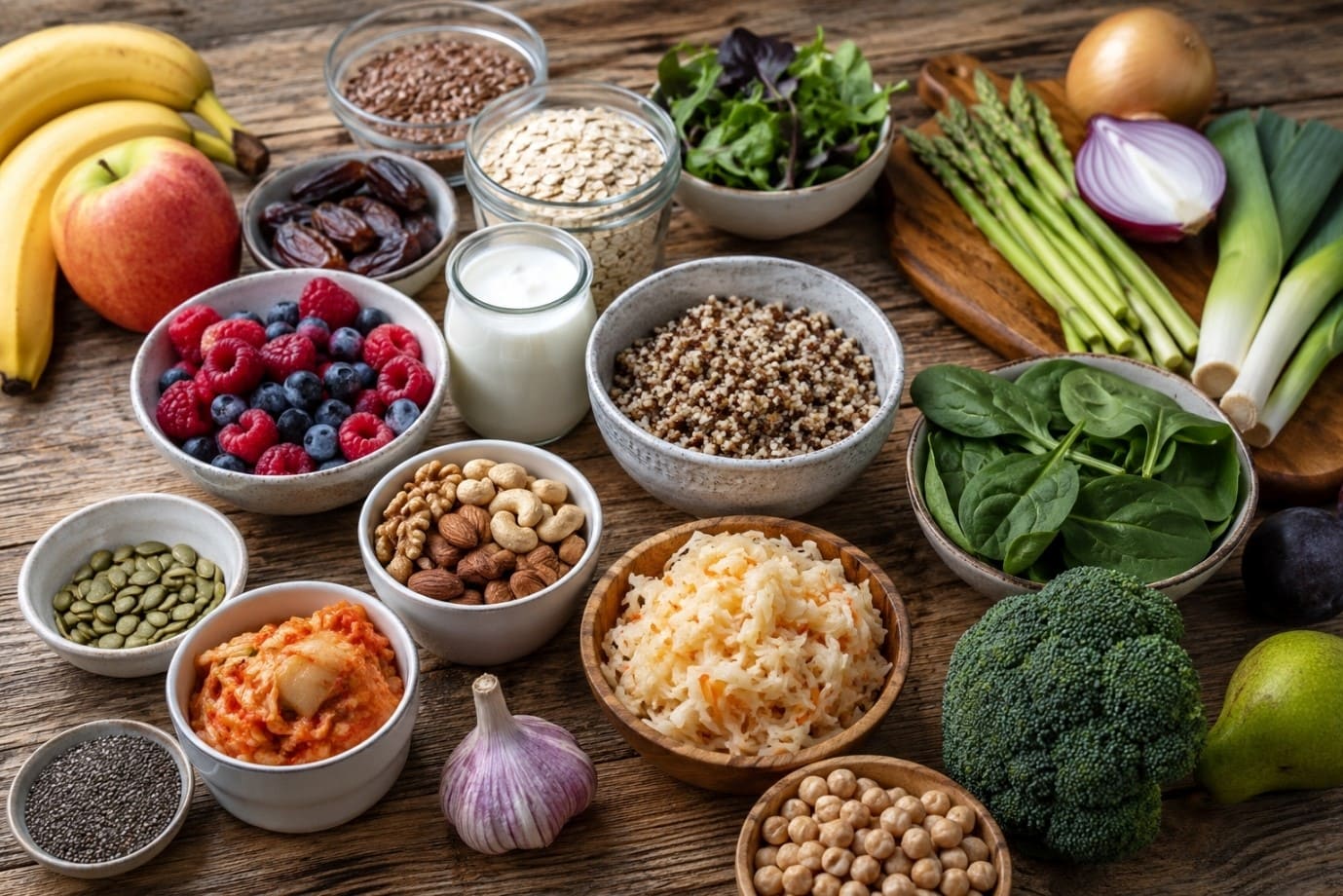
Your digestive tract is home to trillions of microorganisms, including bacteria and other microbes, collectively known as the gut microbiome. These tiny organisms interact with the food you eat and can influence digestion, bowel function and several other aspects of your overall health. A varied diet that includes plenty of plant-based foods and fiber can help create a supportive environment for beneficial gut microbes.
So, what can you eat to improve gut health? Including high fiber foods such as fruits, vegetables, whole grains, pulses, nuts and seeds, is a good place to start. Foods containing prebiotics for gut health can also help nourish certain beneficial bacteria, while suitable fermented foods may provide probiotics for gut health.
The good news is that you do not need an expensive supplement, complicated diet or a list of “perfect” foods to boost gut health. Learning how to improve gut health naturally starts with simple, consistent choices on your plate. In this blog, we will explore the best foods for gut health, practical Indian meal ideas and easy habits that can help you build a diet for healthy gut and better digestion.
What Is a Healthy Gut?
A healthy gut is not simply about having a “good” digestive system. It is a complex environment where your digestive tract, gut bacteria, immune system and the food you eat work together. Understanding this balance can help you make better choices when following a diet for gut health.
The gut microbiome refers to the trillions of microorganisms that live in your digestive tract. These include bacteria and other microbes, and they are different from person to person. Your age, genetics, lifestyle, medications, environment and, importantly, your everyday diet can all influence the composition of your gut microbiome. This is one reason there is no single food or meal plan that works exactly the same way for everyone to improve gut health.
It is also useful to understand the difference between digestive health and the gut microbiome. Digestive health is about how well your digestive system performs functions such as breaking down food, absorbing nutrients and moving waste through the body. The gut microbiome, on the other hand, refers to the community of microorganisms living in your digestive tract and how they interact with your body.
Gut bacteria can support the digestion of certain components of food and produce substances that interact with the gut and immune system. This is why maintaining a varied, balanced eating pattern can be an important part of efforts to improve gut health.
There is no one-size-fits-all formula to boost gut health. Instead, focus on a varied diet, adequate fiber and nutritious whole foods. If you are wondering how to improve gut health naturally, start by building healthy eating habits consistently rather than looking for a quick fix.
What Should a Diet for Gut Health Include?
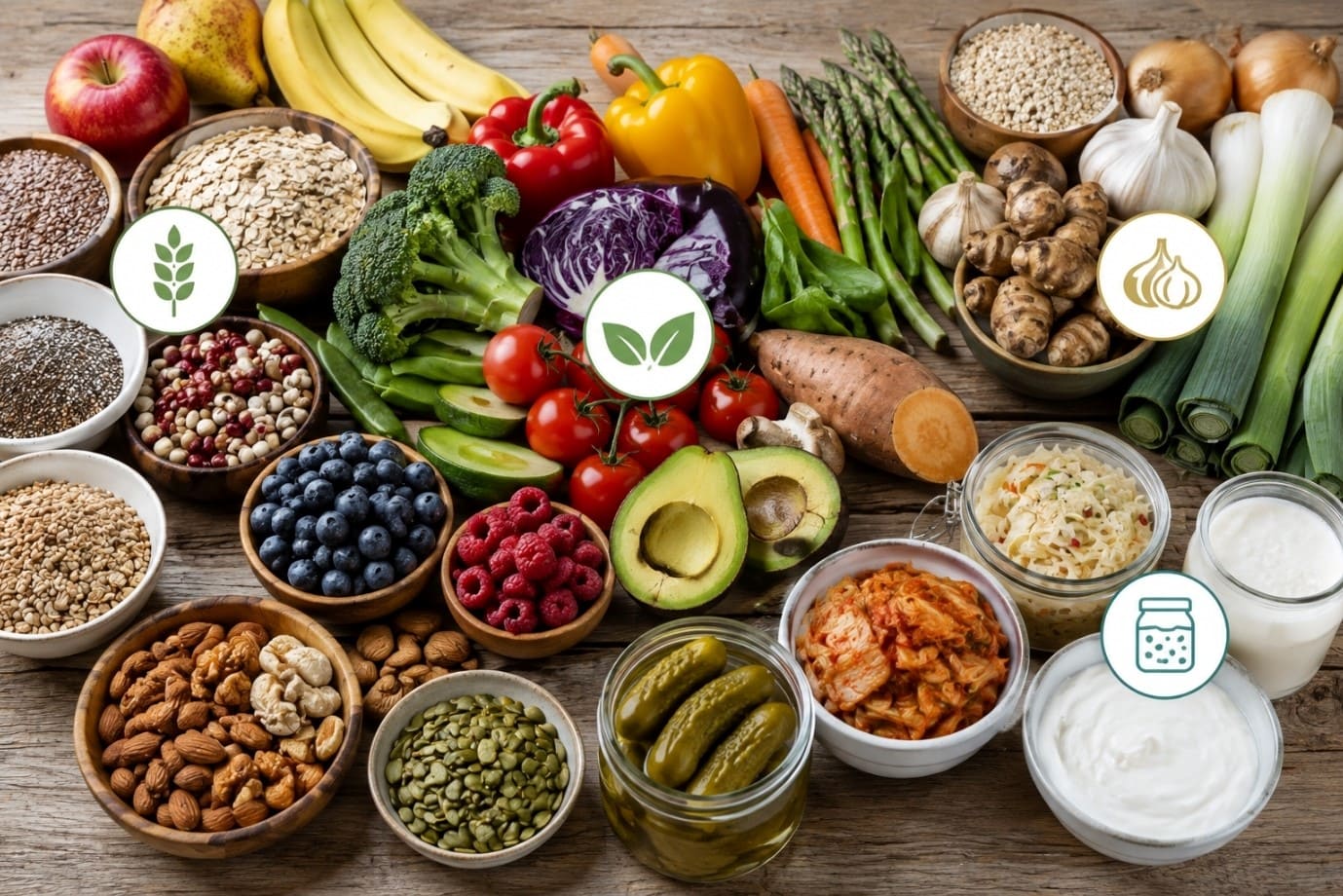
A healthy gut is built through your overall eating pattern, not one “superfood” or a quick-fix drink. A well-planned diet for gut health should provide enough fiber, a variety of plant foods, prebiotic foods and suitable fermented foods. These four pillars can work together to support your gut microbiome and healthy digestion.
👉Fiber: Give Your Gut Microbes Something to Work With
Fiber is one of the most important parts of a diet for healthy gut. Certain types of fiber can be used by gut microbes and may support the production of beneficial compounds, while fiber also helps maintain regular bowel movements. Include high fiber foods for gut health such as vegetables, fruits, pulses, oats, whole grains, nuts and seeds. Increase fiber gradually if your current diet is low in it.
👉Plant Diversity: Eat a Variety of Foods
Instead of eating the same vegetables every day, aim for variety. Include different whole grains for gut health, seasonal fruits, vegetables, pulses, nuts and seeds throughout the week. Eating a wider range of plant foods provides different types of fibers and plant compounds, which can support a more diverse gut microbiome, thereby boost gut health.
👉Prebiotic Foods: Nourish Your Gut Microbes
Prebiotics are food components that can be used by certain microorganisms in the gut. Foods such as garlic, onion, banana, oats, legumes, asparagus and whole grains can contribute prebiotics for gut health. Including these foods regularly is a practical approach to increase healthy bacteria in gut through your diet.
👉Fermented Foods: Choose Them Wisely
Curd or yogurt with live cultures, kefir, fermented vegetables and kimchi can be included as part of a balanced diet and may provide probiotics for gut health. However, not every fermented food is automatically a probiotic food. Processing methods such as pasteurization may destroy live microorganisms.
So, if you are looking for how to improve gut health naturally, focus first on variety, fiber and whole foods. You do not need to rely on expensive best supplements for gut health or a so-called best morning drink for gut health to build healthy habits. Consistency matters far more than a single food or drink.
Best Foods for Gut Health
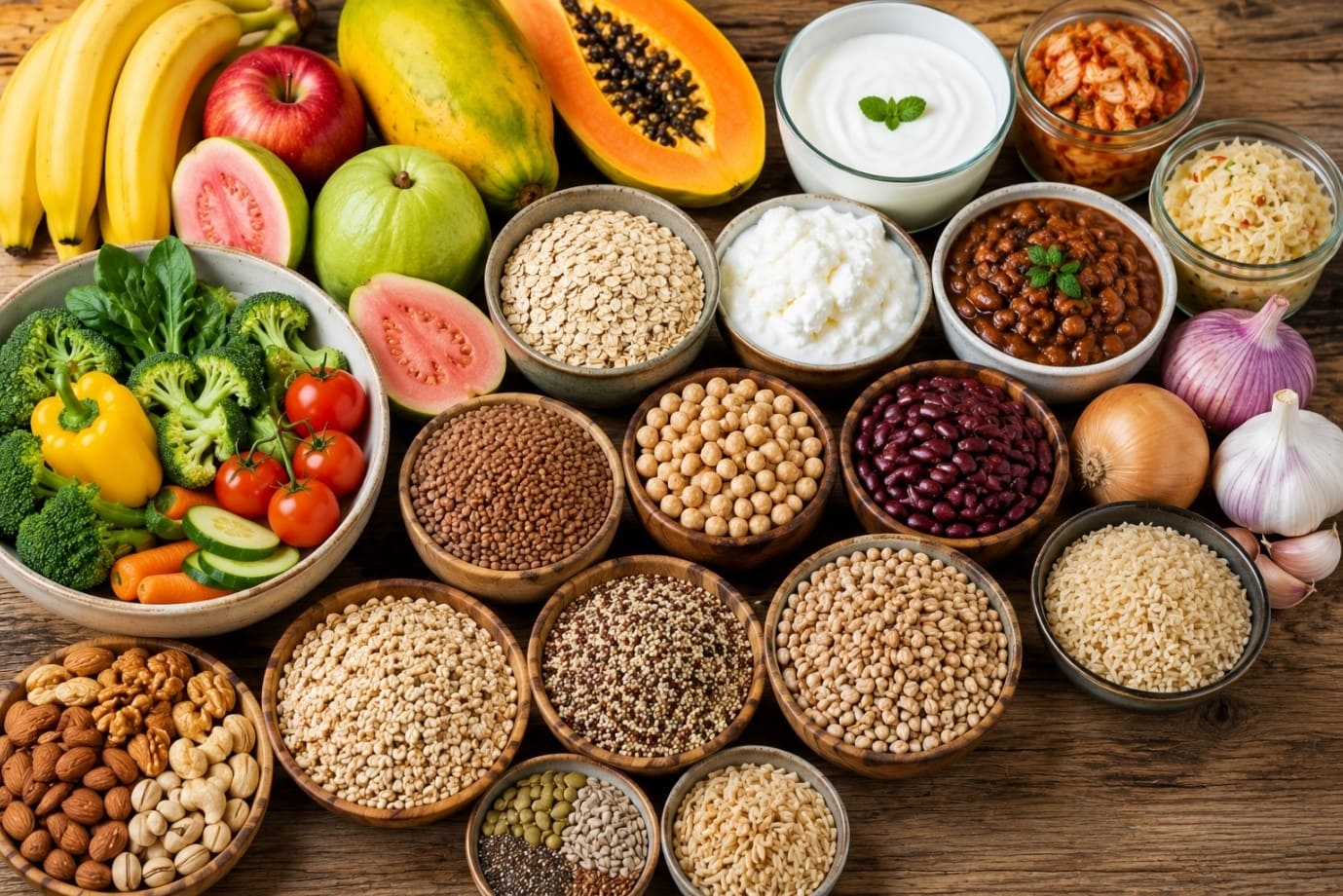
There is no single “miracle” food for your gut. A healthy digestive system benefits from variety, especially foods that provide fiber, plant nutrients and beneficial microorganisms. The best foods for gut health are often simple, everyday ingredients that can easily fit into a balanced diet for healthy gut.
👉Curd or Yogurt
Plain curd or yogurt with live cultures can be a convenient addition to an Indian diet. Depending on the product, it may provide microorganisms associated with probiotics for gut health. Choose plain, unsweetened options and enjoy them with meals, oats or fruit.
👉Bananas
These are an easy source of fiber and make a convenient breakfast or snack. Less-ripe bananas also contain resistant starch, which can be used by some gut microbes to boost gut health. Add sliced banana to oats or enjoy it with a handful of nuts.
👉Oats
These are an excellent way to add fiber to your diet to boost gut health. They contain beta-glucan, a type of soluble fiber, along with other fermentable carbohydrates. Try vegetable oats for breakfast or overnight oats with fruit and seeds.
👉Lentils and Dal
Dal is a staple Indian food that provides both fiber and plant protein. Moong, masoor and toor dal can easily become part of a high fiber diet for gut health. Pair dal with roti, rice and vegetables for a balanced meal.
👉Chickpeas or Chana
These are rich in fiber and versatile enough for salads, chaat, curries or homemade hummus. If you are not used to eating legumes, increase your intake gradually to reduce the chance of digestive discomfort.
👉Beans and Rajma
Rajma and other beans provide fiber and plant protein. They can support a varied diet for healthy gut, but large portions may cause gas in some people. Start with smaller servings and ensure beans are properly soaked and cooked.
👉Whole Grains
Whole wheat, oats, barley, brown rice and millets can help increase your fiber intake. Including a variety of whole grains for gut health can be as simple as choosing whole-wheat roti, adding barley to soups or using millets in traditional recipes.
👉Apples
These provide fiber and beneficial plant compounds. They are one of the best fruits for gut health and make an easy snack. When suitable, enjoy the whole fruit instead of juice to retain its fiber that will boost gut health.
👉Guava
It is an excellent Indian fruit to include in a gut-friendly diet. It provides fiber and vitamin C and works well as a simple snack. Enjoy fresh, seasonal guava rather than relying on sugary fruit drinks.
👉Papaya
It provides fiber, water, vitamins and minerals. It can be enjoyed at breakfast or as a snack. Rather than thinking of papaya as a “gut cleanser,” consider it simply a nutritious fruit that adds variety to your diet.
👉Vegetables
Variety matters more than choosing one “best” vegetable. Include carrots, beans, spinach, broccoli, pumpkin, sweet potato and other seasonal vegetables. Different plants provide different types of fiber and plant compounds that interact with the gut microbiome that would boost gut health.
👉Garlic and Onion
Garlic and onion contain prebiotic compounds that can be used by certain gut microorganisms. Add them to dals, sabzis, soups and curries as an easy way to include prebiotics for gut health in everyday meals.
👉Nuts
Almonds, walnuts and pistachios provide fiber, healthy fats, protein and other nutrients. A small handful makes a nutritious snack or can be added to breakfast bowls and salads that would help improve gut health.
👉Seeds
Chia, flax and pumpkin seeds are simple ways to add fiber and nutritional variety. Sprinkle them over oats, yogurt or salads. If you are increasing fiber, do so gradually and maintain adequate fluid intake.
👉Fermented Foods
Curd, kefir and fermented vegetables can add variety to a balanced diet. Kefir for gut health is often discussed because it may contain live microorganisms. However, not every fermented food is automatically a probiotic, as processing and storage can affect the microorganisms present.
You do not need to eat all these foods every day. Focus instead on variety across the week. If you are looking improve gut health naturally, start with more fruits, vegetables, pulses, whole grains, nuts, seeds and suitable fermented foods. A consistent diet for gut health is more valuable than relying on a trendy gut healthy drink, “detox,” or expensive supplement.
7-Day Sample Indian Diet for Healthy Gut
A gut-friendly diet does not have to be expensive, complicated or based on unfamiliar foods. Indian meals already include many high fiber foods for gut health, such as dal, beans, vegetables, fruits, whole grains, nuts and seeds. The key is to include a variety of these foods throughout the week. The following 7-day plan is a general example of a balanced diet for gut health and can be adjusted according to individual nutritional needs, appetite and lifestyle.
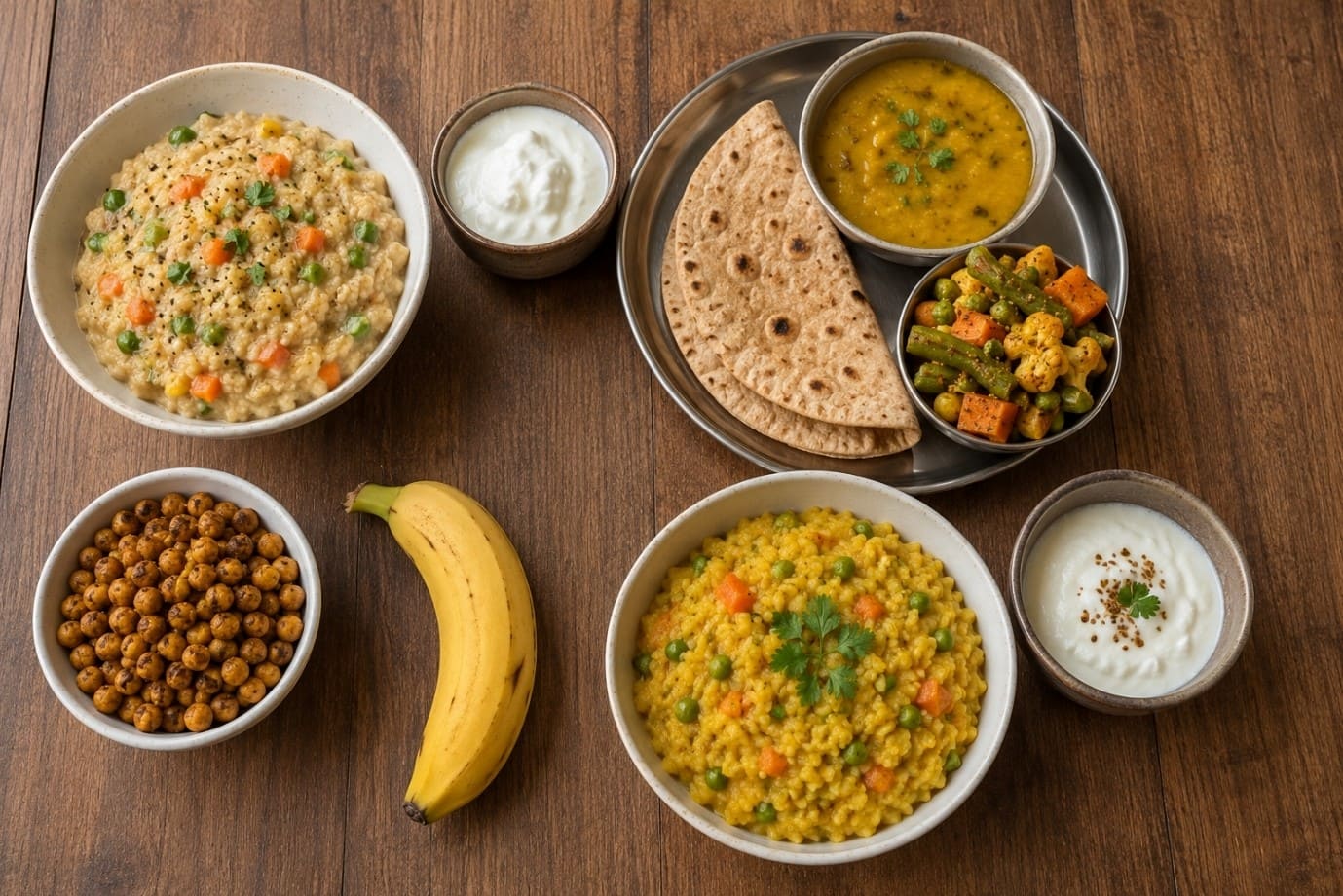
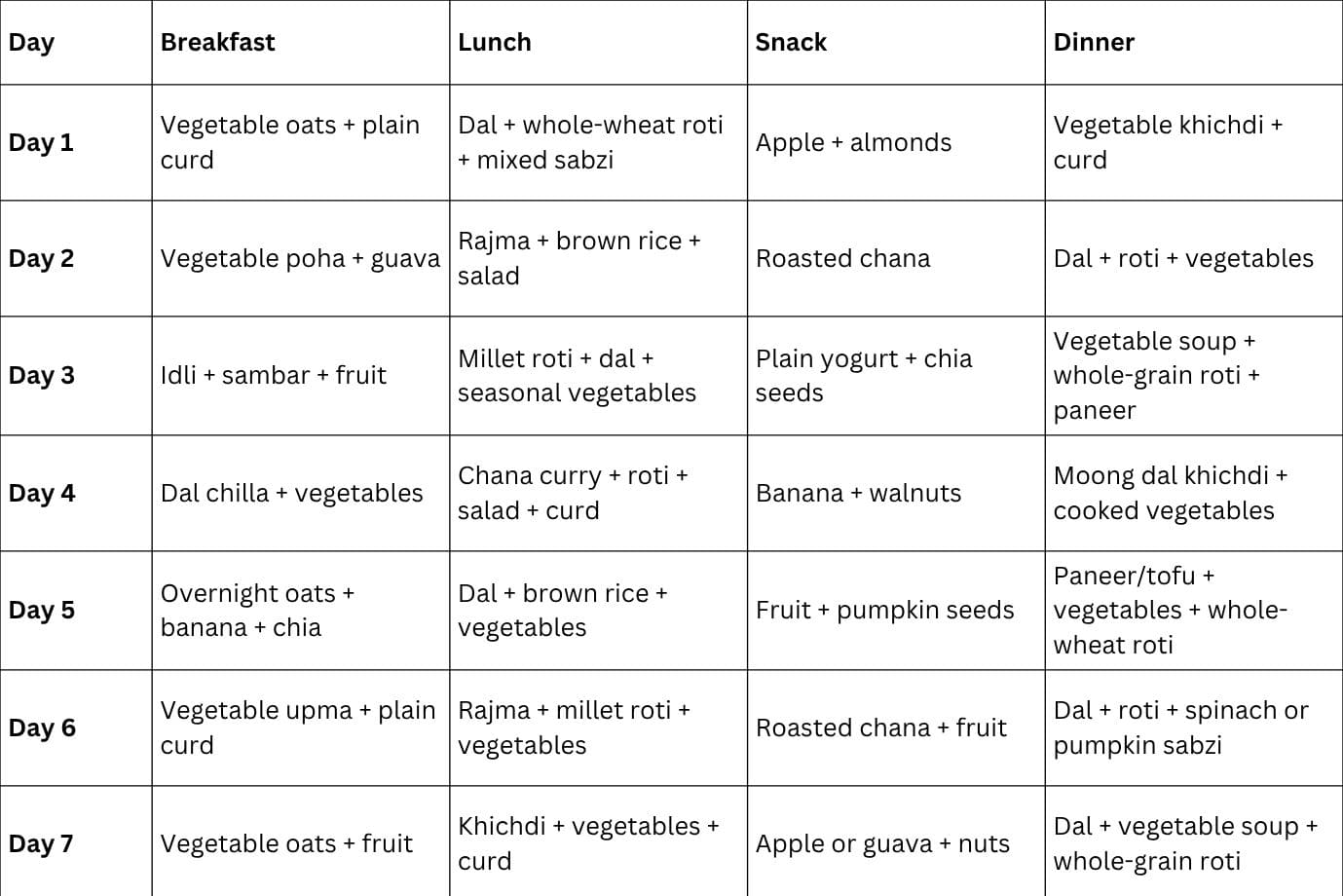
This plan combines whole grains for gut health, pulses, vegetables, fruits, nuts and seeds to provide a variety of fiber and plant nutrients, while curd can provide live cultures when appropriate. If you are looking to improve gut health naturally, focus on variety and consistency rather than a perfect menu. You do not need a special gut healthy drink, expensive supplements or restrictive food rules to support your gut microbiome. People with ongoing digestive symptoms or a diagnosed condition may need a personalized diet for healthy gut based on their individual needs.
Prebiotics vs Probiotics: What’s the Difference?
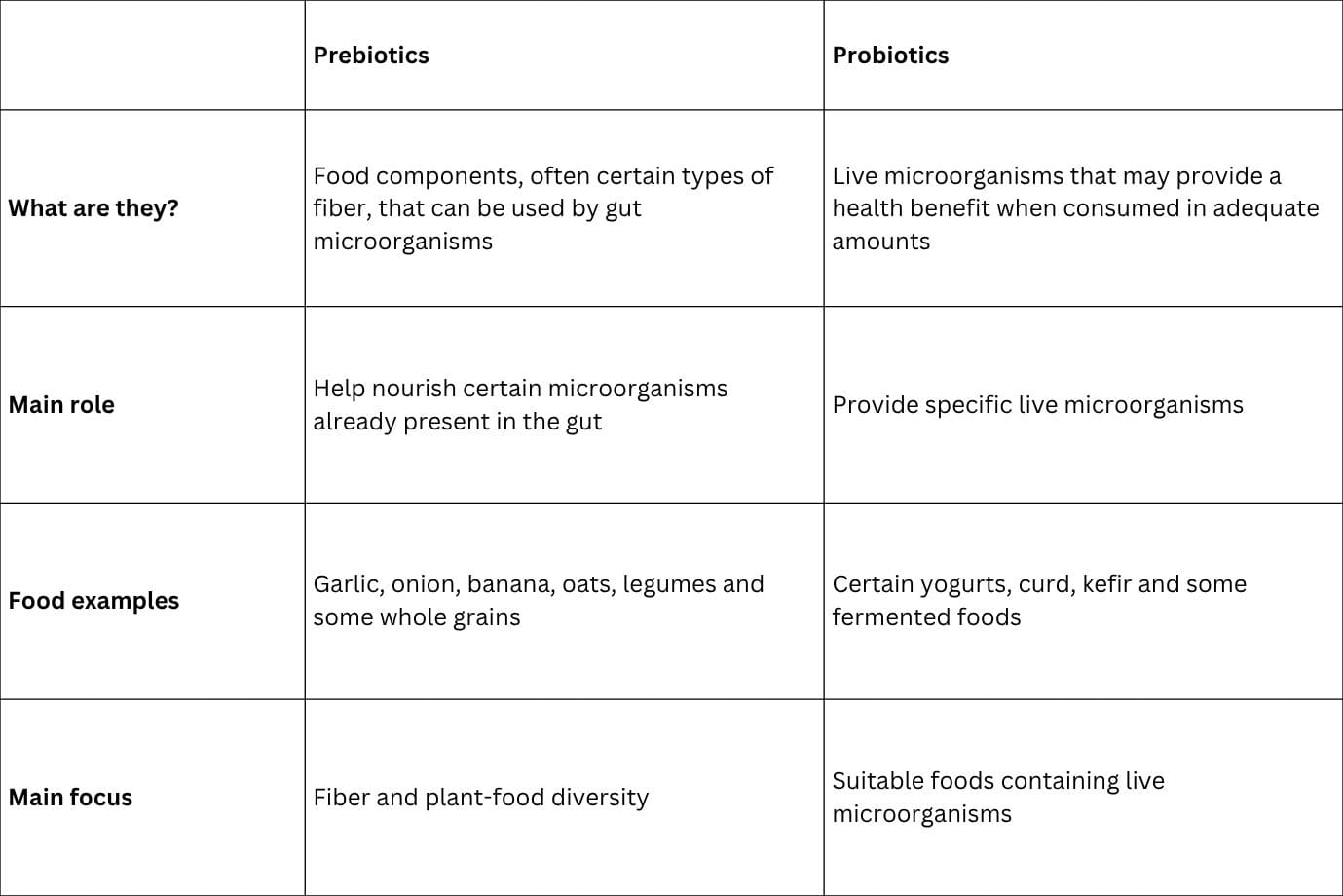
When you are trying to improve gut health, you may often hear the terms prebiotics and probiotics. Although they sound similar, they are not the same thing. Both can have a role in a balanced diet for gut health, but they work in different ways.
Why Do You Need Both?
Think of your gut microbiome as a living community. Prebiotics for gut health can provide food that certain microorganisms can use, while probiotics for gut health are specific live microorganisms that may offer health benefits. In simple terms, prebiotics can help support microorganisms already living in your gut, whereas probiotics provide particular live microorganisms.
This is why they cannot simply be used interchangeably. Eating more high fiber foods for gut health, such as vegetables, fruits, oats, pulses and whole grains, is an important part of a varied eating pattern. Suitable fermented foods, such as certain curd or yogurt products and kefir for gut health, can also be included where appropriate.
If you are wondering how to increase healthy bacteria in gut, focus on overall dietary variety rather than relying on one probiotic food, best supplements for gut health or a trendy drink. A balanced diet for healthy gut that regularly includes fiber-rich plant foods and appropriate fermented foods is a practical way to boost gut health naturally.
Foods and Habits That May Not Support Gut Health
Supporting your gut is not about creating a long list of “bad” foods. Instead, look at your overall eating pattern. Some foods and habits, especially when they become a regular part of your routine, may make it harder to maintain a balanced diet for gut health.

Try to limit:
- Highly processed foods: Frequent intake of ultra-processed snacks and meals may leave less room for fiber-rich whole foods.
- Excess added sugar: Regularly consuming foods and drinks high in added sugar can make it harder to maintain a balanced diet.
- Sugary beverages: Soft drinks and other sweetened drinks can add significant sugar without providing much fiber or nutritional value.
- Excessive alcohol: Alcohol can affect the digestive system and may not be suitable for everyone.
- Very low-fiber eating patterns: Regularly missing vegetables, fruits, pulses and whole grains for gut health means missing important sources of dietary fiber.
- Unnecessarily restrictive diets: Cutting out entire food groups without a clear reason can reduce dietary variety and make it harder to meet nutritional needs.
Do You Need to Stop Gluten, Dairy or Spicy Foods to Boost Gut Health?
Not necessarily. There is no universal rule that everyone needs to eliminate gluten, dairy or spicy foods to improve gut health. Food tolerance varies from person to person. If a particular food consistently causes symptoms, it is better to identify the reason with appropriate professional guidance rather than remove multiple foods on your own.
The goal is not to find the worst foods for gut health and avoid them forever. Instead, focus on variety, moderation and nutrient-rich foods. This is a more sustainable way to boost gut health and support your gut microbiome over time.
Can Probiotic Supplements Improve Gut Health?
Probiotic supplements are often promoted as an easy way to improve gut health, but they are not a one-size-fits-all solution. Probiotics are live microorganisms, and different products contain different strains, combinations and amounts. This means that a probiotic that may be useful for one person or health condition may not provide the same benefit for another.
When searching for the best probiotic for gut health, it is important to look beyond the number of CFUs (colony-forming units). A higher CFU count does not automatically mean a supplement will work better. The specific strains, dose, product quality and reason for taking it all matter.
For most healthy people, supplements are not necessarily required to boost gut health. A varied diet for gut health should come first. Include high fiber foods such as vegetables, fruits, pulses, oats and whole grains for gut health. Suitable fermented foods, including certain curd, yogurt and kefir for gut health, can also be part of a balanced eating pattern.
If you are wondering how to improve gut health naturally, start with your everyday meals rather than immediately reaching for supplements. Prebiotics for gut health, dietary fiber and plant diversity can help support your gut microbiome.
Ultimately, think food first, personalized supplementation when appropriate. If you have persistent digestive symptoms or a specific health condition, speak with a qualified healthcare professional before choosing best supplements for gut health.