When the summer sun is shining bright, children naturally become more active, making it the perfect time to focus on a healthy summer diet plan filled with nutritious summer foods. From outdoor games and family vacations to sports camps and playdates, summer is a season of endless excitement for kids. However, the rising temperatures can also bring several health challenges that parents need to address proactively.
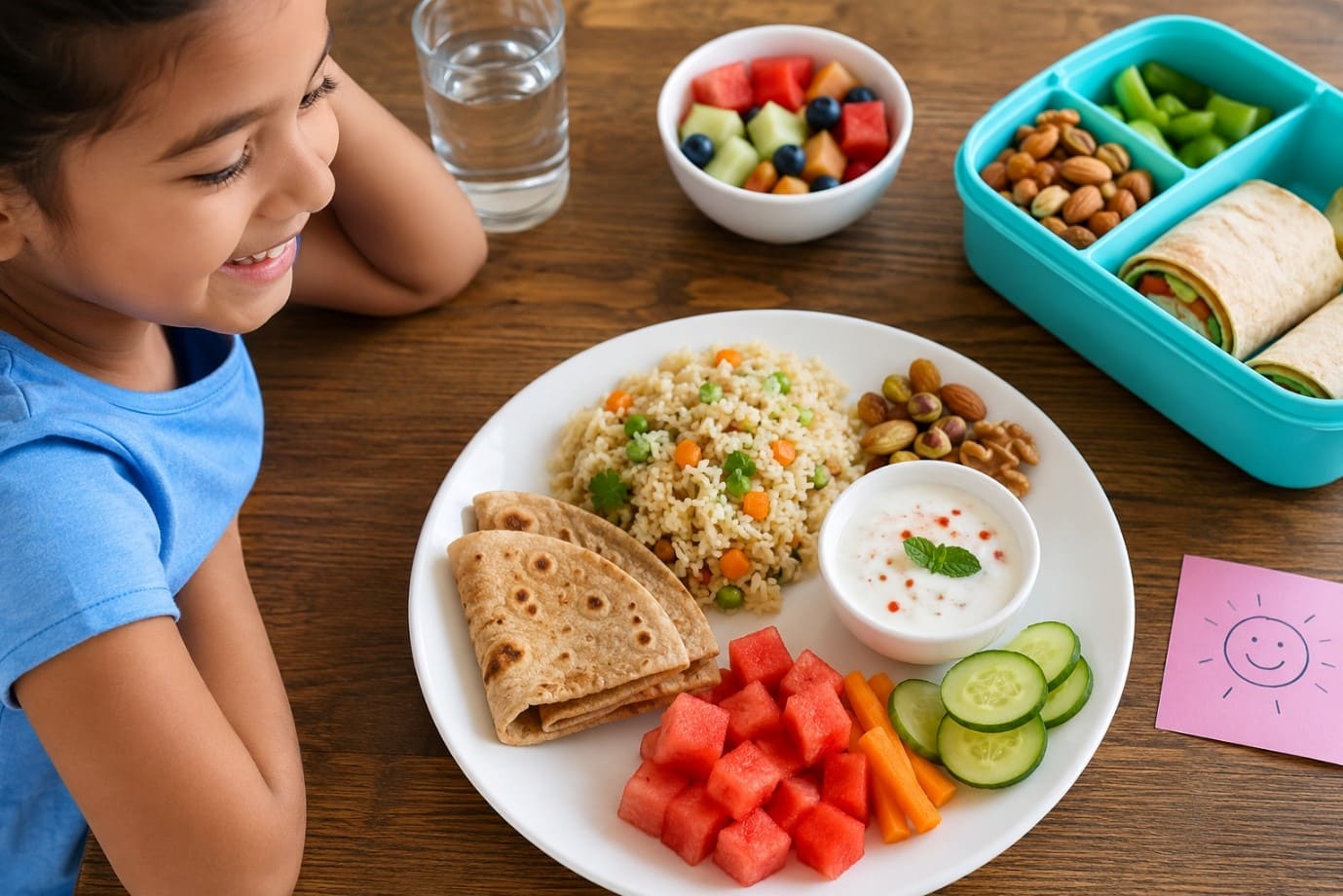
During the hot months, children are more vulnerable to dehydration, fatigue, digestive discomfort and a reduced appetite. Increased outdoor activity often leads to greater fluid loss through sweating, making proper hydration and nutrition more important than ever. Without the right balance of nutrients and fluids, children may feel tired, irritable or less energetic, affecting their ability to fully enjoy their summer break.
This is where a well-planned summer diet plays a crucial role. Including a variety of healthy summer foods such as seasonal fruits, cooling vegetables, whole grains and protein-rich meals can help support growth, maintain energy levels, and strengthen immunity. Additionally, refreshing drinks for summer like coconut water, buttermilk and fresh fruit smoothies can help keep children hydrated and refreshed throughout the day.
In this blog, you’ll discover the best summer foods for children, practical hydration tips, nutritious meal ideas and expert recommendations for creating a balanced summer diet plan. By the end of this blog, you’ll have everything you need to keep your child healthy, active and thriving all summer long.
Why Is a Special Summer Diet Important for Kids?
Children are more vulnerable to summer heat than adults because their bodies regulate temperature differently and lose water more quickly through sweating. This makes following a well-balanced summer diet plan essential for maintaining their energy, hydration and overall health. During the hot months, excessive heat can reduce appetite, increase fatigue and raise the risk of dehydration and heat exhaustion, especially when children spend long hours playing outdoors.
A nutritious summer diet should focus on hydration, energy and growth-supporting nutrients. Since children are in crucial developmental years, they require a steady supply of vitamins, minerals, protein and healthy carbohydrates to support physical and cognitive growth. Including nutrient-rich summer foods and healthy summer foods such as seasonal fruits, vegetables, whole grains and dairy products can help meet these nutritional needs effectively.
👉 Quick Facts for Parents:
- Children can become dehydrated faster than adults.
- Active kids need regular fluids and nutritious meals throughout the day.
- Hydrating drinks for summer like coconut water, buttermilk and fresh fruit smoothies can help replenish lost fluids.
👉 Signs to Watch For:
- Excessive thirst
- Dry lips or mouth
- Unusual tiredness
- Headaches
- Reduced appetite
- Dark-colored urine
A thoughtfully planned summer diet plan can help children stay active, refreshed and healthy throughout the season.
Essential Nutrients Kids Need During Summer
A well-balanced summer diet plan should provide the essential nutrients children need to stay hydrated, energetic and healthy during the warmer months. Since high temperatures can affect appetite and increase fluid loss, choosing the right summer foods becomes even more important for supporting growth and overall well-being.
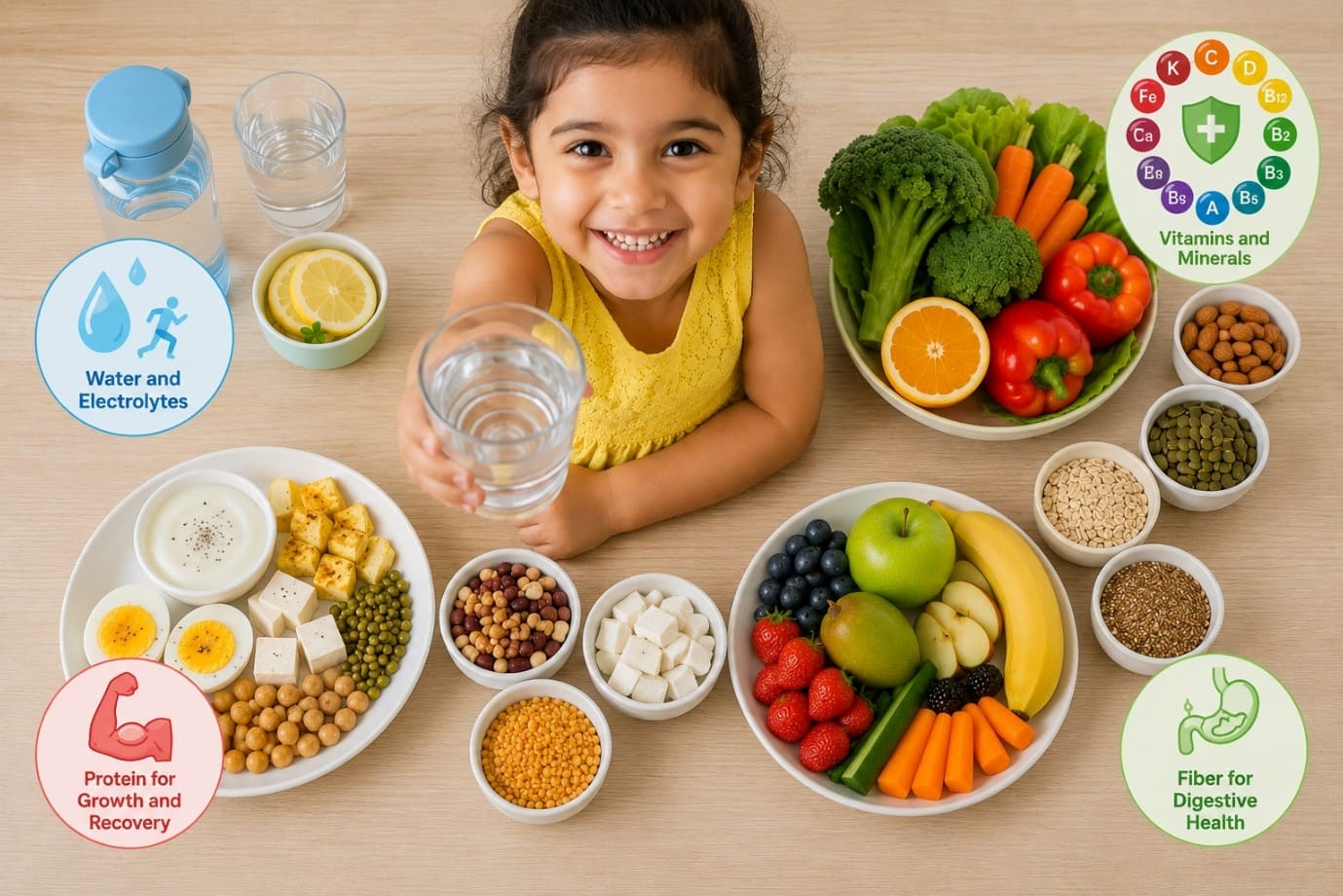
Water and Electrolytes:
Nuts and seeds are a must-have in any diet for brain health. Walnuts, often called “brain-shaped food,” are rich in omega-3 fatty acids and are excellent for sharp memory. Almonds, loaded with vitamin E, help protect brain cells and support a diet for increasing memory power. Flaxseeds are another great addition, especially for improving overall brain health.
Vitamins and Minerals:
A nutritious summer diet should include foods rich in Vitamin C, Vitamin A, potassium and magnesium. Vitamin C supports immunity and skin health, while Vitamin A promotes healthy vision and growth. Potassium and magnesium help maintain hydration and muscle function. Many healthy summer foods such as mangoes, oranges, papaya, leafy vegetables and bananas are excellent sources of these nutrients.
Protein for Growth and Recovery:
Protein remains essential even during hot weather because children continue to grow and stay physically active. Including kid-friendly protein sources like eggs, paneer, yogurt, lentils, beans and lean meats in a summer diet plan helps support muscle development, tissue repair, and sustained energy levels.Fiber for Digestive Health:
Summer vacations often lead to irregular eating habits, making fiber an important part of a healthy summer diet. Fiber-rich summer foods such as fruits, vegetables, whole grains and legumes help maintain healthy digestion, prevent constipation and support gut health throughout the season.
Best Foods to Include in a Summer Diet Plan for Kids
Choosing the right summer foods is essential to keep children hydrated, energized and healthy during the warmer months. A well-balanced summer diet plan should include a variety of nutrient-dense foods that provide hydration, support growth and help children stay active throughout their summer adventures. Here are some of the best summer foods to include in your child’s daily meals.
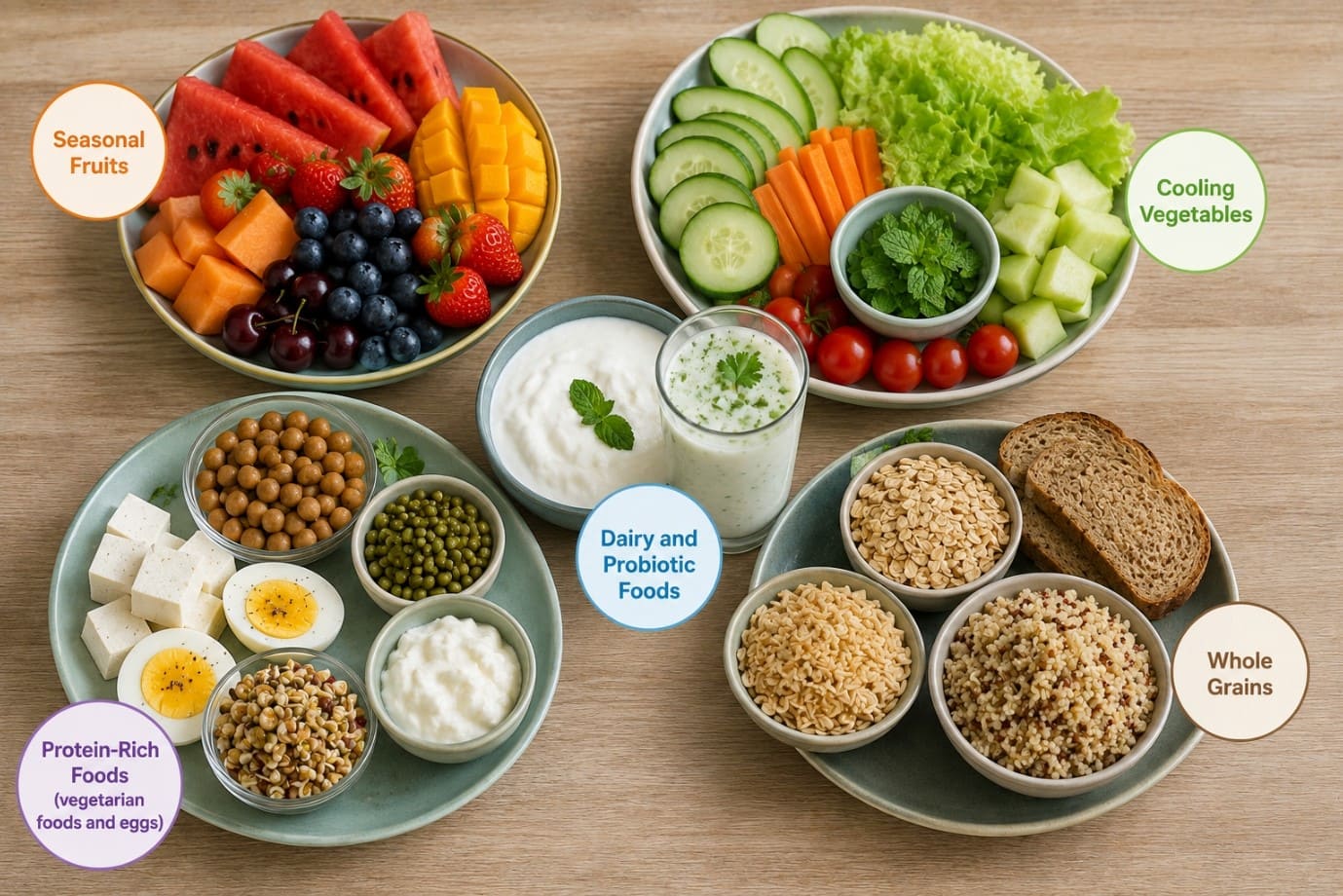
👉 Seasonal Fruits
Fresh seasonal fruits are among the most beneficial healthy summer foods for kids because they are naturally rich in water, vitamins, minerals and antioxidants.
- Watermelon contains over 90% water, making it excellent for hydration.
- Muskmelon helps replenish fluids and provides essential vitamins A and C.
- Mango, when consumed in moderation, offers fiber, antioxidants and energy.
- Papaya supports digestion and strengthens immunity.
- Oranges are packed with Vitamin C and help maintain hydration.
- Litchi provides natural sugars and important nutrients for energy.
- Grapes are rich in antioxidants and help keep children refreshed.
Including these summer foods in snacks, fruit salads or smoothies can make healthy eating enjoyable for kids.
👉 Cooling Vegetables
Cooling vegetables are an important part of a nutritious summer diet as they help regulate body temperature and support hydration.
- Cucumber is rich in water and helps prevent dehydration.
- Bottle gourd is light, easy to digest and naturally cooling.
- Zucchini provides fiber and essential nutrients.
- Lettuce is refreshing and can be added to salads and wraps.
- Tomato supplies antioxidants, Vitamin C and hydration.
These healthy summer foods can be incorporated into soups, salads, sandwiches and homemade snacks.
👉 Dairy and Probiotic Foods
Dairy products help support gut health and provide essential nutrients during summer.
- Curd and yogurt contain probiotics that promote healthy digestion.
- Buttermilk is a refreshing addition to any summer diet plan and helps maintain hydration.
- Homemade smoothies made with yogurt and fruits offer a delicious combination of nutrients and hydration.
👉 Protein-Rich Foods
Protein remains vital for children’s growth, muscle development and recovery, even during hot weather.
Include foods such as:
- Eggs
- Paneer
- Lentils
- Chickpeas
- Soy products
- Lean chicken and fish
These protein-rich options ensure that a child’s summer diet supports healthy growth and sustained energy levels. For more information, you can also go through our dedicated blog on Protein rich veg diet for growing kids.
👉 Whole Grains
Whole grains provide long-lasting energy and essential fiber.
Nutritious choices include:
- Oats
- Whole wheat
- Brown rice
- Millets
Adding these grains to a summer diet plan helps maintain digestive health, supports energy needs and complements other best summer foods for overall wellness. By combining fruits, vegetables, proteins, dairy and whole grains, parents can create a balanced and nutritious meal plan that keeps children healthy and active all summer long.
Foods and Drinks Kids Should be Avoided from Summer Diet for Kids
While including the right summer foods is important, it is equally essential to know which foods and beverages should be limited during the hot season. Certain eating habits can increase the risk of dehydration, digestive discomfort and low energy levels, making it harder for children to stay active and healthy. A balanced summer diet plan should focus on nutrient-rich choices while minimizing foods that offer little nutritional value.
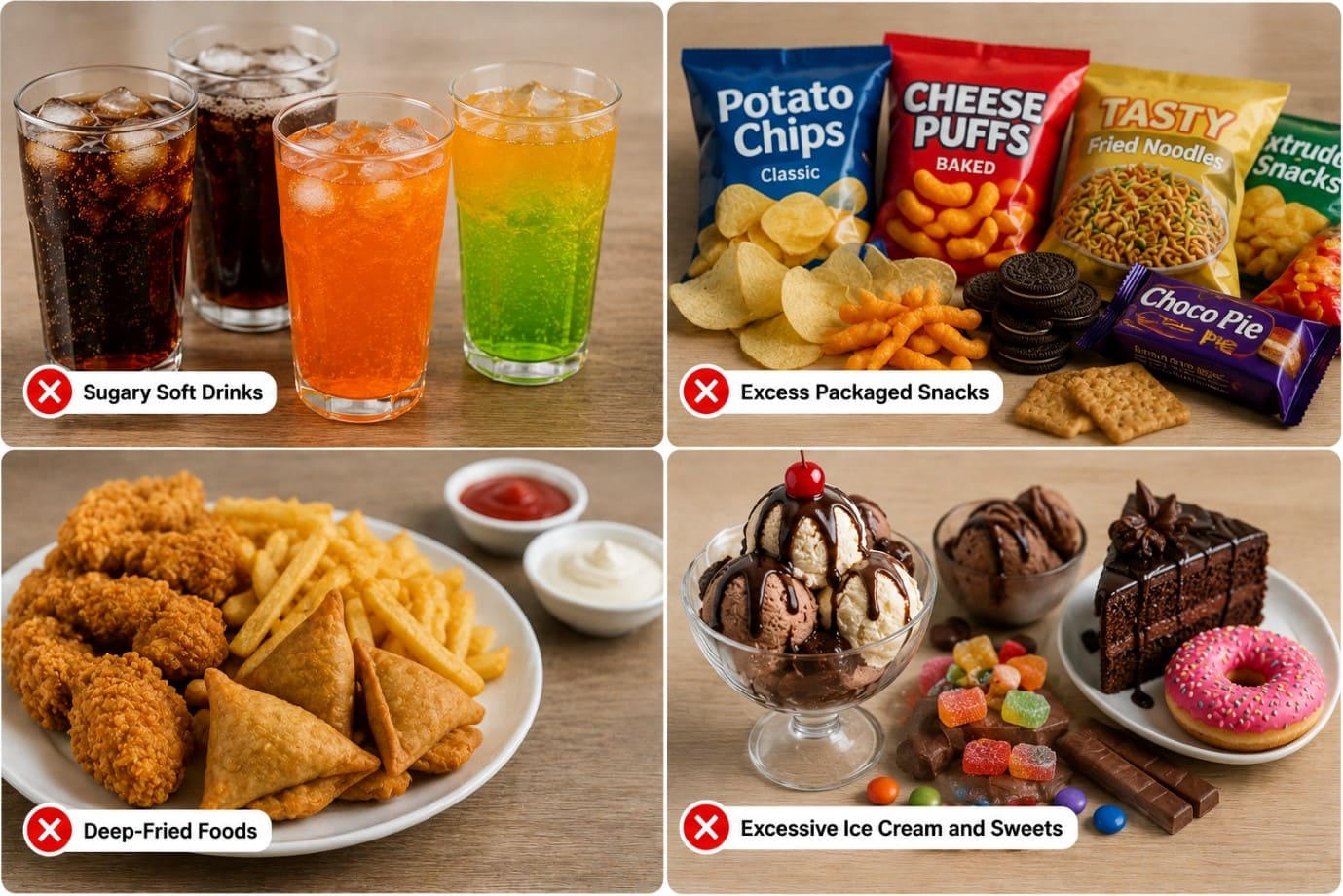
Sugary Soft Drinks:
Many packaged soft drinks and flavoured beverages contain excessive amounts of hidden sugar and artificial additives. Although they may seem refreshing, these drinks for summer can actually contribute to dehydration by increasing thirst and providing empty calories. Instead of supporting hydration, sugary drinks may lead to energy crashes and unhealthy weight gain.
Excess Packaged Snacks:
Chips, instant noodles and processed snacks are often high in sodium, preservatives, and unhealthy fats. Excess sodium can increase fluid loss and make children feel thirstier, which is not ideal during hot weather. Replacing processed snacks with healthy summer foods can help support better hydration and nutrition.
Deep-Fried Foods:
Deep-fried items such as fries, samosas and nuggets can be difficult to digest, especially in hot temperatures. These foods may cause bloating, indigestion and sluggishness, reducing a child’s overall comfort and energy levels during summer.
Excessive Ice Cream and Sweets:
While occasional treats are perfectly fine, excessive consumption of ice cream, candies and sugary desserts can displace nutrient-rich summer foods from a child’s diet. A healthier approach is to choose naturally sweet alternatives such as fruit-based desserts, yogurt parfaits or homemade frozen fruit popsicles.
Healthy Swap Table
Making these smart swaps can significantly improve a child’s summer diet, helping them stay hydrated, energized, and healthy throughout the season. A thoughtful summer diet plan built around healthy summer foods can ensure children enjoy their summer vacation without compromising their nutrition.
Avoid | Choose Instead |
Sugary soft drinks | Coconut water, lemon water, homemade fruit-infused water |
Packaged chips | Roasted makhana, fruit chaat, nuts |
Deep-fried snacks | Grilled sandwiches, baked sweet potato wedges |
Ice cream loaded with sugar | Frozen yogurt, fruit popsicles, smoothie bowls |
Packaged juices | Fresh fruit smoothies and natural drinks for summer |
7-Day Sample Summer Diet Plan for Kids
Creating a balanced summer diet plan for kids doesn’t have to be complicated. The key is to include a variety of healthy summer foods that provide hydration, energy, protein, vitamins and minerals throughout the day. A well-structured summer diet should begin with proper hydration and include nutrient-rich meals that support growth, digestion and immunity while keeping children refreshed during hot weather.
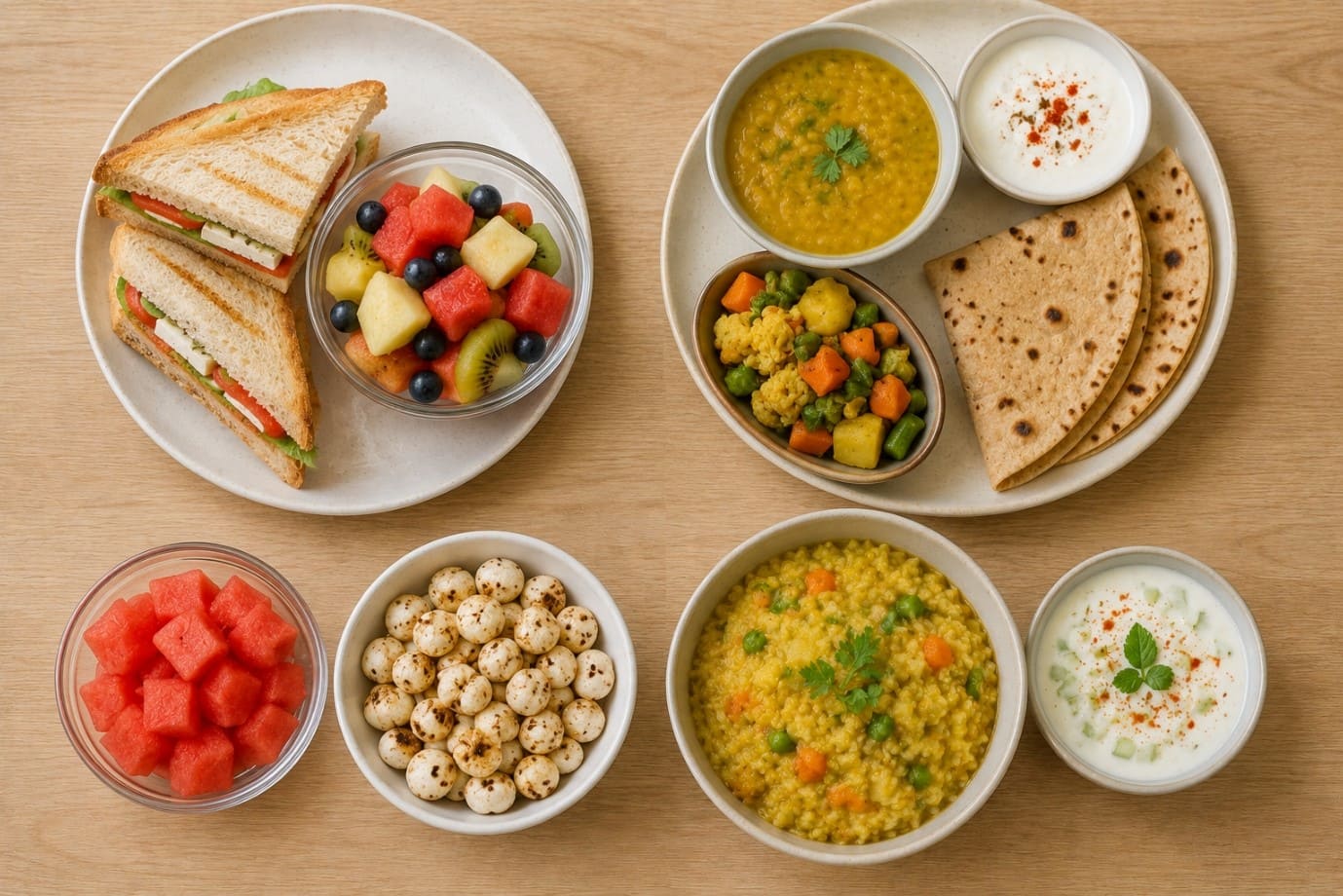
This summer diet plan combines some of the best summer foods with balanced nutrition to support hydration, digestion, immunity, and healthy growth. By regularly including healthy summer foods and refreshing drinks, parents can ensure their children remain energized and ready to enjoy all the fun that summer brings.
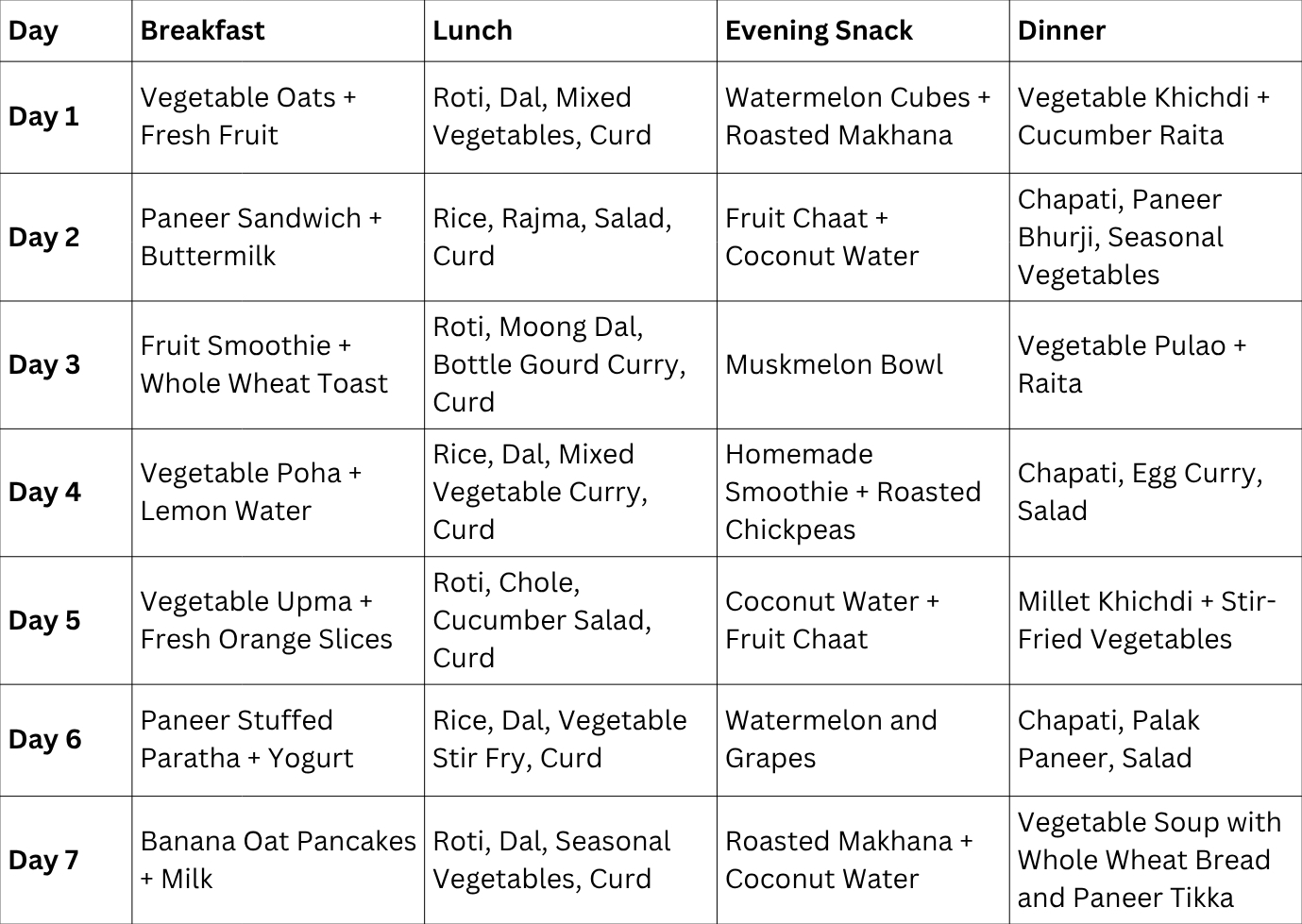
👉 Tips for Parents
- Include plenty of summer foods such as watermelon, muskmelon, cucumber, oranges and grapes throughout the week.
- Pair meals with natural drinks for summer like coconut water, buttermilk, lemon water and homemade smoothies.
- Rotate different healthy summer foods to ensure children receive a variety of vitamins, minerals, protein and fiber.
- This summer diet plan is designed to provide balanced nutrition while keeping kids hydrated, energized and healthy during the hot months.
- If your family consumes non-vegetarian foods, eggs can be included 2–3 times a week as a high-quality protein source within a balanced summer diet.
Hydration Tips for Kids During Summer
Staying hydrated is one of the most important aspects of a healthy summer diet plan. During hot weather, children lose fluids more quickly through sweating, making them more vulnerable to dehydration, fatigue, headaches and reduced energy levels. Ensuring adequate fluid intake is essential for maintaining body temperature, supporting digestion and keeping kids active throughout the day.
👉 How Much Water Should Kids Drink?
While hydration needs vary based on activity levels and weather conditions, general recommendations include:
- 4–8 years: 5–7 cups (1.2–1.6 liters) of water daily
- 9–13 years: 7–9 cups (1.6–2.1 liters) of water daily
- 14+ years: 8–11 cups (1.9–2.6 liters) of water daily
Children who spend more time outdoors may require additional fluids as part of their summer diet.
👉 Fun Ways to Encourage Hydration
Getting kids to drink more water can be easier with a few creative strategies:
- Add fruits like lemon, orange, berries or cucumber to create fruit-infused water.
- Let children choose colorful and reusable water bottles.
- Set fun hydration reminders during playtime and outdoor activities.
👉 Natural Hydrating Drinks
In addition to water, parents can include nutritious drinks for summer such as:
- Coconut water
- Lemon water
- Buttermilk
- Fresh fruit smoothies
These refreshing drinks for summer help replenish fluids, provide essential nutrients and complement a balanced summer diet plan, ensuring children stay hydrated, healthy and energized throughout the season. You can also read our comprehensive blog on Importance of Hydration in Children’s Health for extensive information.
How to Build Healthy Eating Habits During Summer Vacation
Summer vacation is the perfect time to help children develop lifelong healthy eating habits. With more free time and flexible schedules, parents can encourage better food choices and establish routines that support a balanced summer diet plan. Building healthy habits early not only improves nutrition during the holidays but also helps children maintain good health throughout the year.
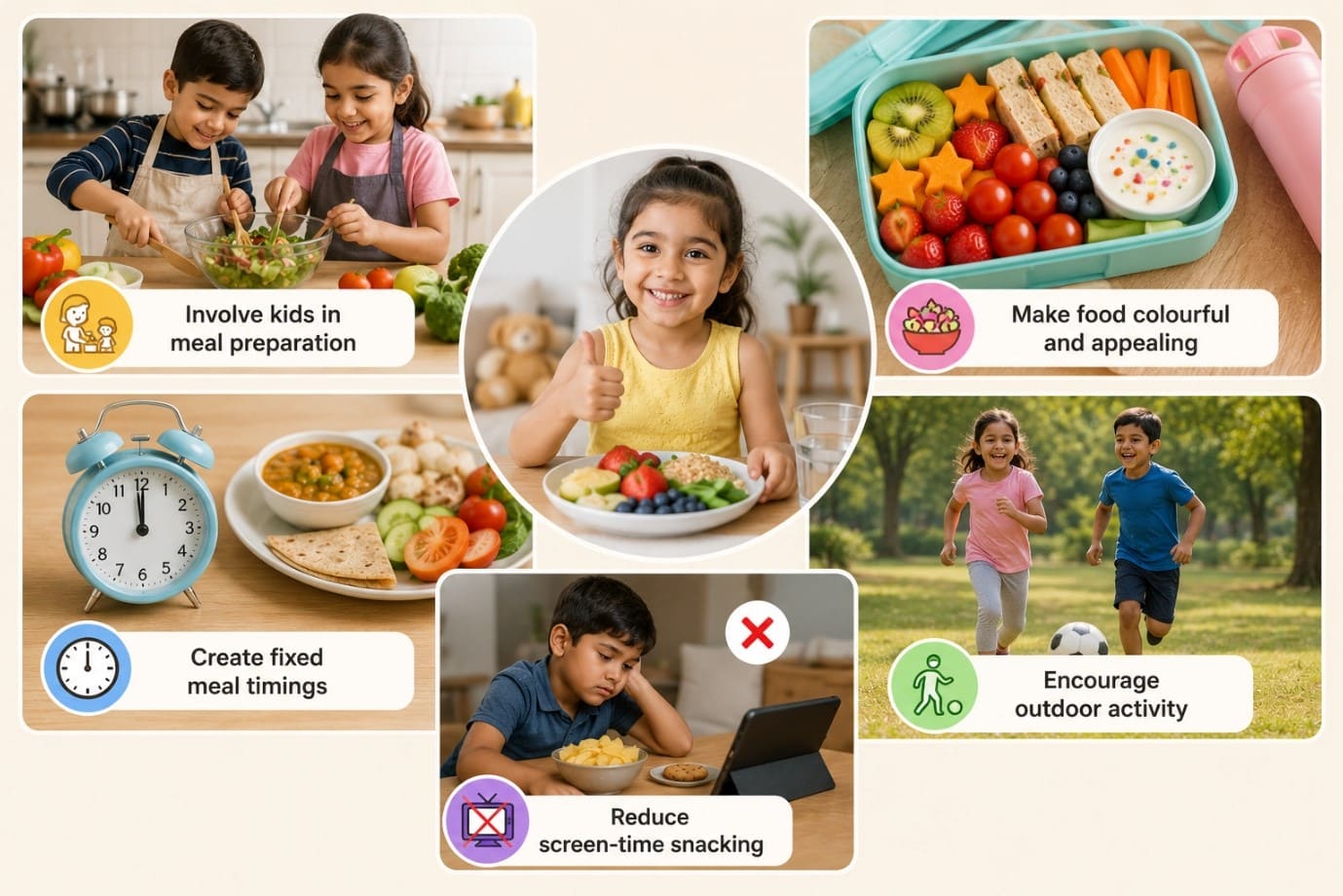
Here are some simple and effective ways to promote healthy eating during summer:
Involve kids in meal preparation:
Let children help wash fruits, mix ingredients or prepare simple snacks. When kids participate in cooking, they are more likely to try new summer foods and make healthier choices.
Make food colourful and appealing:
Create meals using a variety of fruits and vegetables. Brightly coloured plates filled with healthy summer foods such as watermelon, mangoes, cucumbers and tomatoes can make mealtime more exciting.
Create fixed meal timings:
Maintaining regular meal and snack schedules helps prevent overeating and ensures children receive the nutrients they need as part of a healthy summer diet.
Encourage outdoor activity:
Active play, sports and outdoor games increase appetite and motivate children to consume nutritious meals and hydrating drinks for summer.
Reduce screen-time snacking:
Excessive screen time often leads to mindless eating of unhealthy snacks. Instead, offer nutrient-rich options and some of the best summer foods like fruit chaat, roasted makhana, yogurt and smoothies.
By combining nutritious summer foods, regular routines, physical activity, and healthy drinks for summer, parents can create a sustainable summer diet plan that helps children stay active, energized and healthy throughout their vacation.